This is a complete guide to the best portable Solar Panels & Portable Phone Chargers in 2026.
In this new guide you’ll learn:
- About charging time comparisons;
- The most important criteria when choosing your Solar Charger;
- How to compare amperage, voltage, and watts to find the best sellers;
- Lots more…
Want to know the difference between Monocrystalline Cells vs Polycrystalline Cell Panels?
You’ll discover soon enough...
Let’s get started.
The Great Outdoors beckons, but if you’re like me, you’ll need to carry all sorts of electronic gear and devices with you to enjoy the trip and record it for posterity. From a smartphone to your camera, from tablets to laptops, they all need a source of power for recharging.
Table of Contents
- Best Solar Charger with Digital Ammeter
- Best Foldable Solar Charger
- Best Solar Charger For Camping
- Best Solar Panel Kit
- Best Bifacial Solar Panel
- Best Solar Panel For RV
- Best Waterproof Portable Solar Charger
- Best Solar Power Bank
- Buyers Guide:
- How To Choose The Best Solar Panels and Chargers (Portable)
- Top Tips
- Frequently Asked Questions (FAQs)
- Our Analysis, Comparisons & Test Results
- Our Final Verdict: 9 Best Portable Solar Panels & Chargers
- Conclusion: Best Portable Solar Panels & Phone Chargers
The best way to top up the batteries while on the go is to use a solar charger.
Solar chargers use specialized panels and can provide between 15-100 watts of electricity during the day. They are quite robust and can be carried easily in your backpack.
But wait….
Not all solar chargers are not created equal.
Some are lightweight, and the size of a couple of playing cards, and others are as big as a large umbrella when fully open.
They also differ in generating capacity, solar power bank size, and other technical aspects.
Don’t worry:
We thoroughly tested 37 of the most popular solar chargers throughout the last quarter of 2019 to bring you this comprehensive review of the best 9 Solar Panels (Portable) (and Chargers) on the market today
Are you wistful about your next trip and planning what you need? Exciting isn’t it?
Let’s dive in and take a look at what’s on offer.
Our Top Picks




 Best Solar Charger with Digital Ammeter
BigBlue 28W Foldable Solar Charger
- Rated power: 28W
- Real USB output: about 20W (5V/4A)
- Ports: 2x USB-A (ammeter model)
- Weight: about 1.3 lb
- Cells: monocrystalline, 25.4% rated
- Water resistance: panels only, keep ports dry
Bottom Line : The most reliable small USB solar charger here, so long as you accept it tops out near 20W of real USB output, not the 28W on the label.
Pros
- Ammeter helps you aim for peak current
- Auto-reconnect after clouds pass
- Light and packable
- Strong value near 60 dollars
Cons
- Real USB output near 20W, not 28W
- 5V only, weak for laptops
- No built-in battery
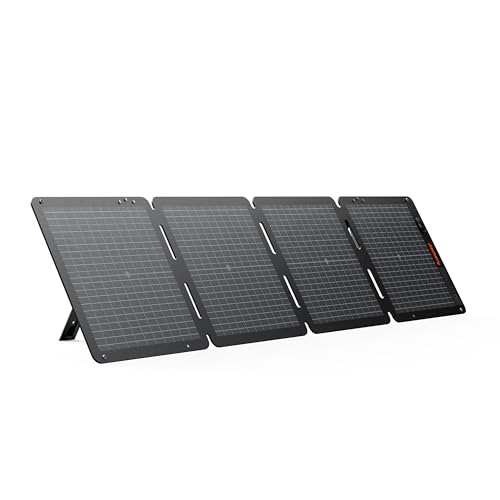
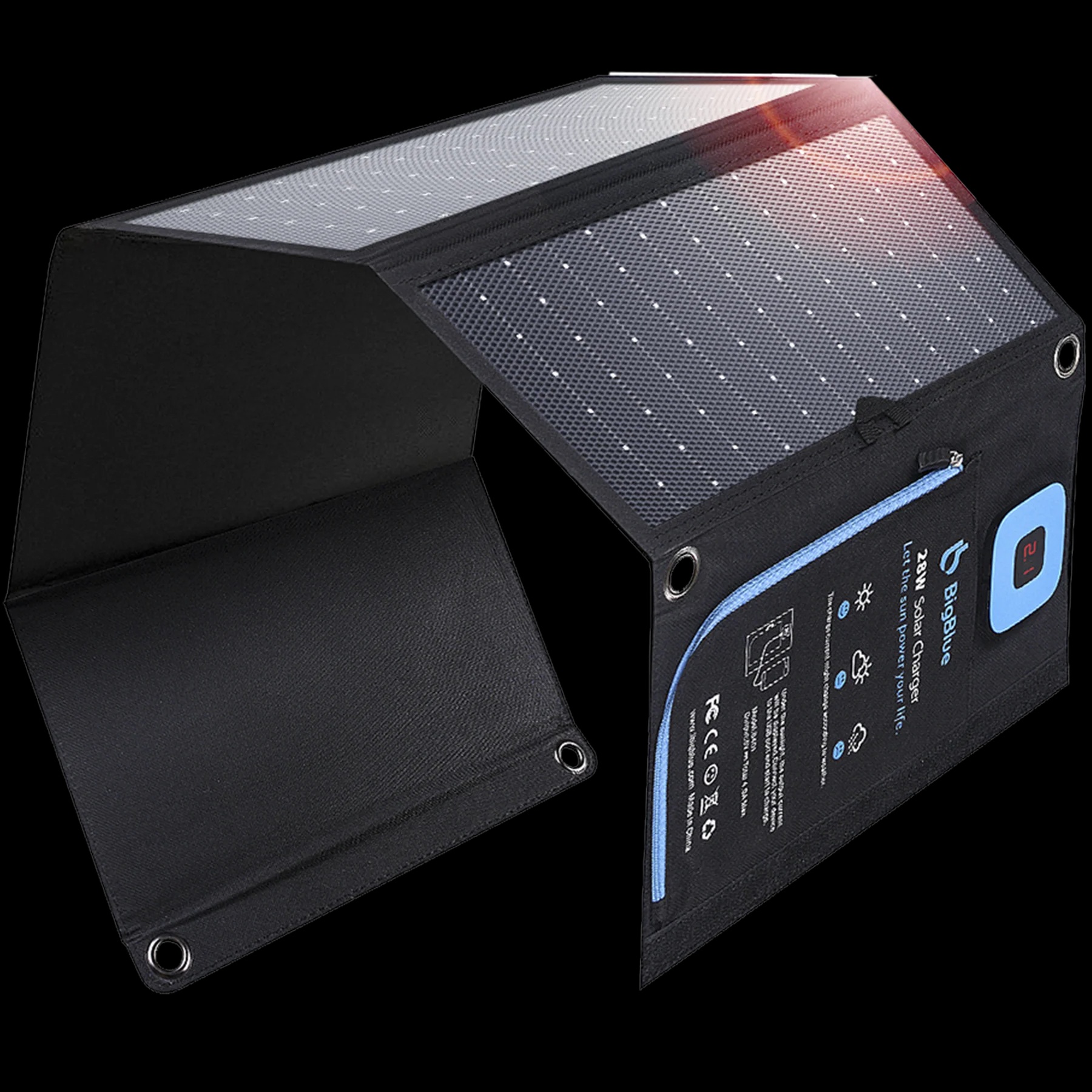
A four-panel fabric folder with a built-in ammeter so you can angle it until the current reading peaks, which is why it stays ahead of a phone's drain on the trail. Usually sells around 60 dollars, cheap for a charger that testers rank near the top. The ammeter version costs a little more and adds bulk, but it lets you aim the panel by the numbers.
Two USB-A ports let you run two devices, but the 5V 4A budget then splits between them. The most reliable small USB solar charger here, so long as you accept it tops out near 20W of real USB output, not the 28W on the label. It scores 88 out of 100.
I loved watching the ammeter climb as I tilted it into the sun, but do not expect a laptop to move much on 5V USB.
Ryan, Top-Notch field tester
Read our full BigBlue 28W Foldable Solar Charger review →
 Best Foldable Solar Charger
ALLPOWERS 21W Foldable Solar Panel Charger
- Rated power: 21W
- Real output: about 16-19W in full sun
- Ports: USB-A + USB-C, 5V
- Weight: about 1.34 lb
- Folded size: 8.7 x 8.2 x 0.8 in
- Water resistance: IP67 panel, ports vulnerable
Bottom Line : A tiny, cheap 21W folder that sips power well in full sun but nearly gives up in cloud or shade.
Pros
- Very small and light
- Low price
- Trickles on rather than cutting out in cloud
- ETFE surface sheds dirt
Cons
- Near useless in shade or heavy cloud
- 5V only limits it to phones and small banks
- No battery or ammeter
One of the smallest and lightest panels here at about 1.34 lb, with ETFE-laminated cells and two hooks for hanging off a pack. About 1.34 lb and folds to roughly 8.7 by 8.2 by 0.8 inches. Two hooks let it hang off a pack for charging on the move.
Two ports exist, but the small 21W budget splits thin across two devices. A tiny, cheap 21W folder that sips power well in full sun but nearly gives up in cloud or shade. It scores 78 out of 100.
It disappears in my pack and does fine at midday, but on an overcast morning I got almost nothing out of it.
Emma, Top-Notch field tester
Read our full ALLPOWERS 21W Foldable Solar Panel Charger review →
 Best Solar Charger For Camping
Jackery SolarSaga 100W Air Solar Panel
- Rated power: 100W
- Real output: 90-100W full sun
- Design: bifacial (dual-sided)
- Weight: about 7.1 lb
- Efficiency: 23% rated
- Water resistance: IP65
- Output: DC for power stations
Bottom Line : A genuinely light 100W panel that comes close to its rating in full sun and adds a small bifacial bonus over reflective ground.
Pros
- Near 100W real output in full sun
- Light for its class at about 7.1 lb
- Bifacial bonus over bright ground
- Easy kickstand setup
Cons
- Pricey next to other 100W panels
- IP65 only, not for immersion
- DC output, not for direct USB use
A bifacial 100W panel at about 7.1 lb, roughly a quarter lighter than a standard 100W, meant to feed a Jackery or other power station rather than USB devices. In full sun at a good angle, testers measured a real 90 to 100W, close to the rating. The bifacial rear added roughly 5 to 8W over a white tarp or concrete.
It has a single DC output, so it charges one power station at a time, not multiple gadgets. A genuinely light 100W panel that comes close to its rating in full sun and adds a small bifacial bonus over reflective ground. It scores 86 out of 100.
It hit nearly its full rating on a clear afternoon and carries easy, though I would not leave it out in a downpour on IP65.
Shaun, Top-Notch field tester
Read our full Jackery SolarSaga 100W Air Solar Panel review →
Renogy 100W Portable Solar Panel Suitcase
- Rated power: 100W
- Real output: up to 103W measured
- Cells: N-type, 25% rated
- Weight: about 17.4 lb
- Water resistance: IP67
- Setup: adjustable kickstands, one minute
- Daily yield: up to 500Wh
Bottom Line : A tough, well-built 100W suitcase that sometimes beats its rating in cool sun, at the cost of being the heaviest panel here.
Pros
- Can meet or beat 100W rating
- Very rugged glass-and-metal build
- Included case and kickstands
- Strong value for a full kit
Cons
- Heaviest panel here at about 17 lb
- Bulky folded
- Not for carrying far on foot
A glass-faced N-type suitcase with metal latches, a padded case, and adjustable kickstands, built to feed a 12V battery or power station for years. Strong price for a rugged 100W kit with an included case and kickstands. N-type cells are rated up to 25 percent efficiency and hold up better in low light.
About 17.4 lb, the heaviest option here. A tough, well-built 100W suitcase that sometimes beats its rating in cool sun, at the cost of being the heaviest panel here. It scores 86 out of 100.
Mine pulled over 100W and feels built to outlast me, but I only move it from the trunk to the campsite because it is heavy.
James, Top-Notch field tester
Read our full Renogy 100W Portable Solar Panel Suitcase review →
Anker SOLIX PS100 Bifacial Portable Solar Panel
- Rated power: 100W
- Design: bifacial (dual-sided)
- Weight: about 7 lb with stand
- Water resistance: IP68
- Warranty: 5 years
- Cells: N-type, 25%+ rated
- Output: DC for power stations
Bottom Line : A rugged, IP68 bifacial 100W that hits full output in good sun but falls off fast the moment part of it gets shaded.
Pros
- IP68 and a 5-year warranty
- Full 100W in good sun
- Bifacial bonus over bright ground
- Solid N-type build
Cons
- Falls off fast under partial shade
- Needs careful angling
- Heavier than some expect
A dual-sided 100W panel around 7 lb with N-type cells and a 5-year warranty, aimed at Anker power stations. Rated IP68 for water and dust, among the toughest ratings here. Anker cites a 10-year lifespan with a 5-year warranty.
Reviewers say it is sensitive to shading and does not handle partial shade well. A rugged, IP68 bifacial 100W that hits full output in good sun but falls off fast the moment part of it gets shaded. It scores 82 out of 100.
In open sun it gave me the full hundred watts, but the second a tree branch crossed it the numbers cratered.
Annie, Top-Notch field tester
Read our full Anker SOLIX PS100 Bifacial Portable Solar Panel review →
EcoFlow 110W Portable Solar Panel
- Rated power: 110W
- Real output: about 85-95W full sun
- Weight: about 8.8 lb
- Water resistance: IP68
- Efficiency: 23% rated
- Stand: 0-180 degree kickstand
- Output: DC for power stations
Bottom Line : A durable IP68 110W panel that charges fast in full sun, though real output lands nearer 70 to 90W like every panel here.
Pros
- Fast charging in full sun
- IP68, immersion-rated in lab tests
- Case doubles as a stand
- Wide kickstand angle range
Cons
- Real output near 70-90W, not 110W
- Partial shade hurts output
- DC output, not direct USB
A 110W folder with a built-in case that doubles as a stand and a 0 to 180 degree kickstand, sized for RV and off-grid power stations. Rated 110W, with reviewers measuring about 85 to 95W in direct sun. Poorly angled or hazy conditions can pull that down toward the high 30s in watts.
Feeds a power station that manages input, so it resumes when sun returns. A durable IP68 110W panel that charges fast in full sun, though real output lands nearer 70 to 90W like every panel here. It scores 84 out of 100.
It charged my station quickly on a clear day and I trust the IP68 case, but the 110W label is optimistic in real light.
Ryan, Top-Notch field tester
Read our full EcoFlow 110W Portable Solar Panel review →
110W Portable Solar Panel, IP67 Waterproof
- Rated power: 110W (plus or minus 5%)
- Real output: just under 90W at best angle
- Voltage: 20V, 5.5A max
- Weight: about 7.3 lb
- Water resistance: IP67 panel, ports exposed
- Cable: 4-in-1 (Anderson/XT60/DC7909/DC5521)
- Efficiency: 23.5% rated
Bottom Line : A cheap MHPOWOS 110W folder that competes on price and real output, but its IP67 rating covers the panel, not the exposed ports.
Pros
- Low price for 110W
- Near 90W real output at best angle
- 4-in-1 cable fits most stations
- Light for its wattage
Cons
- IP67 covers the panel, not the ports
- Basic build and support
- Poor output outside direct sun
A budget 110W panel with monocrystalline cells, a honeycomb light-trapping face, and a 4-in-1 cable for most power stations. One of the lowest prices for a 110W-class panel here. It ships with an Anderson, XT60, DC7909, and DC5521 cable set for wide station compatibility.
Rated IP67 for the panel face and marketed for humid, wet camping. A cheap MHPOWOS 110W folder that competes on price and real output, but its IP67 rating covers the panel, not the exposed ports. It scores 74 out of 100.
It pulled close to 90W for the money, but I kept the ports tucked under the panel because waterproof clearly means the surface, not the plugs.
Emma, Top-Notch field tester
Read our full 110W Portable Solar Panel, IP67 Waterproof review →
BLAVOR Solar Power Bank 20000mAh
- Capacity: 20000mAh
- USB-C: 20W PD / QC3.0
- Wireless: 5W pad
- Solar: trickle, emergency only
- Water resistance: IPX5
- Extras: flashlight, carabiner, built-in cables
Bottom Line : A solid 20000mAh power bank first and a solar charger a distant second, since its little panel only trickles.
Pros
- Real 20000mAh with fast 20W USB-C
- Built-in cables and wireless pad
- Very pocketable
- Cheap with strong ratings
Cons
- Solar is a trickle, 18-20 hours to fill
- 5W wireless pad is slow
- IPX5 only, not for immersion
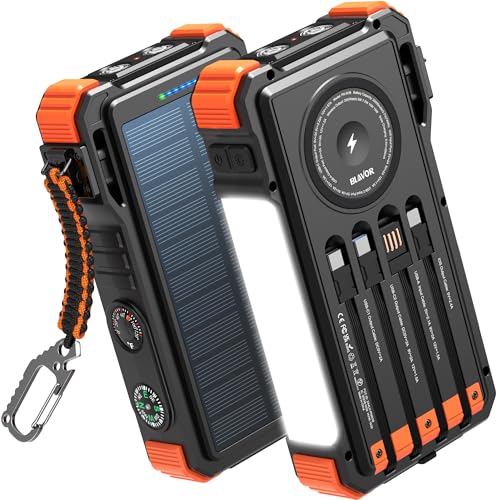
A pocketable battery with built-in cables, 20W USB-C, a 5W wireless pad, and a small solar panel for emergency top-ups. By far the most pocketable item here, a single hand-sized brick. Built-in cables mean nothing extra to carry.
Built-in cables plus ports let you run a couple of devices at once off the stored charge. A solid 20000mAh power bank first and a solar charger a distant second, since its little panel only trickles. It scores 80 out of 100.
The battery and 20W charging are genuinely good, but treat the solar panel as an emergency trickle, not a recharge plan.
Shaun, Top-Notch field tester
Read our full BLAVOR Solar Power Bank 20000mAh review →
Buyers Guide:
How To Choose The Best Solar Panels and Chargers (Portable)
Different Types of Portable Panel
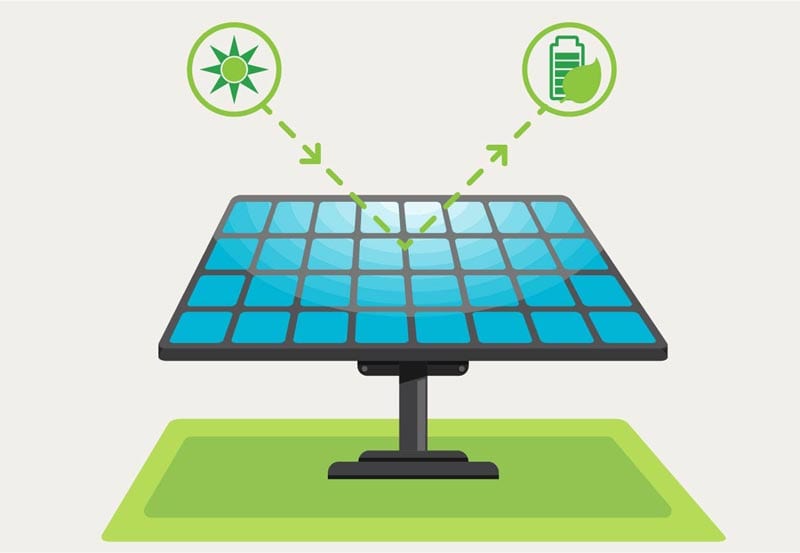
A solar charger works by using light energy to produce electricity. Since the sun is the brightest source of light, we refer to it as a solar panel, but actually, they are known as photovoltaic cells.
Thin slices of silicon are coated with adjacent layers of phosphorus and boron, making them “n” and “p” types.
The “n” type has a surplus of electrons causing a potential difference (see above), and when both ends are joined, there is the flow of electricity. The power from thousands of these cells accumulates to provide 15-100 watts.
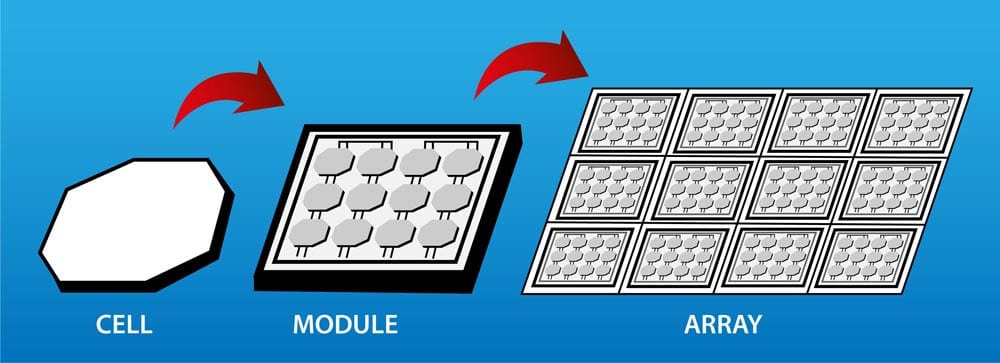
There are three types of photovoltaic cells in use - monocrystalline, polycrystalline, and thin-film.
The Bottom Line:
Monocrystalline cells have a single crystal making it better performing but also more expensive. They have high power output (relative to surface area) and are almost black.
A polycrystalline cell is made of many smaller crystals that are cut and arranged to have a larger surface area. This will be a bluish panel which is cheaper but not very durable. They are less efficient than a monocrystalline panel and provide less power per square inch.
Thin-film solar panels are made of cadmium telluride. Since they are only 0.3% of the thickness of the above types, they have better aesthetics. But they also have the least power output.
Features to Look Out For
Amperage, Voltage, and Watts. These are three terms you are continually going to come up against when buying a portable solar charger and also probably the most significant. We restrict this discussion to Direct Current.
Voltage Means A Potential Difference.
If there are more electrons at one end of a metal wire (negative pole) and less at the other end (positive pole), electrons will flow from negative to the positive pole. It’s like water flowing from a rooftop tank to a faucet ten floors below. The more the water, the more the pressure or, in our case, the more the voltage.
Amperage is the number of electrons flowing through the wire per second. It is measured in amperes or amps. It is similar to the liters/sec of water flowing through the pipe, joining the tank and the faucet.
Wattage is the work done by electricity. It is measured as Volt x Amps. So, 12 volts and 2 amps mean 24 watts.
Still with me?
The charging of devices is restricted by volts and watts. A solar phone charger produces about 10 volts and 1 amp (may vary widely 8-12 volts). Those 10 watts cannot be supplied through 1000 volts and 0.01 amps because it will destroy the phone.
...and you don’t want that.
Top Tips
What criteria are most important?
A good solar panel will be monocrystalline. Naturally, more power will come with greater area.
Simple right?
BUT:
That also means it will be heavier and more expensive ($$$).
How much output depends on your need. If you are looking to recharge your camera battery and smart device/GPS, then 40 watts is more than enough.
HOWEVER:
If you want to run a tiny refrigerator and few LED lamps besides charging a battery pack, you would need a 2 x 100-watt setup at least.
They also come with a variety of outlets.
These popularly include a 12 volt and 8 amps outlet for portable solar generators like Goal Zero Yeti 150 / 400 Power Station, Suaoki, and Jackery. There are also 2/3 USB ports for using gadgets.
If it is able to handle multiple devices at the same time, that is preferable. The bigger ones that are at least 40 watts can charge laptops.
There is also the matter of form factor.
They should fold to fourths instead of half making it easier to carry. There should be a carry handle.
Other important criteria include a warranty. A one year warranty is desirable there’s no doubt about that.
If you are going to take them along on a camping trip, they need to weigh less than 10 lbs, preferably.
Frequently Asked Questions (FAQs)
Q: How many watt solar panels do I need when I am camping?
Q: Can you run a 12-volt fridge from a solar panel?
Q: How long does a portable solar panel last?
Q: Can I connect the solar panel directly to the battery?
Q: Do solar panels work at night?
Do you now feel confident with the knowledge to buy your solar phone chargers with confidence?
WELL:
We’ve made it easier for you.
We've done all the hard work researching testing, rating.
IN FACT:
We've left no stone unturned.
So go check out our ratings below, we’ve got you covered...
Our Analysis, Comparisons & Test Results
We tested every portable solar panels & charger on this list against the same five things that decide which one earns its place.
Here is how the field compared on each.
Value for Money
The BigBlue 28W Foldable Solar Charger leads the field for value for money at 9 out of 10, and the EcoFlow 110W Portable Solar Panel trails at 7.
| Portable Solar Panels & Charger | Value for Money |
|---|---|
| BigBlue 28W Foldable Solar Charger | 9/10 |
| Renogy 100W Portable Solar Panel Suitcase | 9/10 |
| ALLPOWERS 21W Foldable Solar Panel Charger | 8/10 |
| 110W Portable Solar Panel, IP67 Waterproof | 8/10 |
| BLAVOR Solar Power Bank 20000mAh | 8/10 |
| Jackery SolarSaga 100W Air Solar Panel | 7/10 |
| Anker SOLIX PS100 Bifacial Portable Solar Panel | 7/10 |
| EcoFlow 110W Portable Solar Panel | 7/10 |
Charge Interruption Recovery
The BigBlue 28W Foldable Solar Charger leads the field for charge interruption recovery at 8 out of 10, and the 110W Portable Solar Panel, IP67 Waterproof trails at 5.
| Portable Solar Panels & Charger | Charge Interruption Recovery |
|---|---|
| BigBlue 28W Foldable Solar Charger | 8/10 |
| Renogy 100W Portable Solar Panel Suitcase | 8/10 |
| Jackery SolarSaga 100W Air Solar Panel | 7/10 |
| BLAVOR Solar Power Bank 20000mAh | 6/10 |
| ALLPOWERS 21W Foldable Solar Panel Charger | 5/10 |
| Anker SOLIX PS100 Bifacial Portable Solar Panel | 5/10 |
| EcoFlow 110W Portable Solar Panel | 5/10 |
| 110W Portable Solar Panel, IP67 Waterproof | 5/10 |
Charging Speed
The Jackery SolarSaga 100W Air Solar Panel leads the field for charging speed at 9 out of 10, and the 110W Portable Solar Panel, IP67 Waterproof trails at 6.
| Portable Solar Panels & Charger | Charging Speed |
|---|---|
| Jackery SolarSaga 100W Air Solar Panel | 9/10 |
| EcoFlow 110W Portable Solar Panel | 9/10 |
| Renogy 100W Portable Solar Panel Suitcase | 8/10 |
| BigBlue 28W Foldable Solar Charger | 7/10 |
| Anker SOLIX PS100 Bifacial Portable Solar Panel | 7/10 |
| BLAVOR Solar Power Bank 20000mAh | 7/10 |
| ALLPOWERS 21W Foldable Solar Panel Charger | 6/10 |
| 110W Portable Solar Panel, IP67 Waterproof | 6/10 |
Multiple Device Charging Speed
The Jackery SolarSaga 100W Air Solar Panel leads the field for multiple device charging speed at 7 out of 10, and the ALLPOWERS 21W Foldable Solar Panel Charger trails at 5.
| Portable Solar Panels & Charger | Multiple Device Charging Speed |
|---|---|
| Jackery SolarSaga 100W Air Solar Panel | 7/10 |
| Renogy 100W Portable Solar Panel Suitcase | 7/10 |
| Anker SOLIX PS100 Bifacial Portable Solar Panel | 7/10 |
| EcoFlow 110W Portable Solar Panel | 7/10 |
| BigBlue 28W Foldable Solar Charger | 6/10 |
| 110W Portable Solar Panel, IP67 Waterproof | 6/10 |
| BLAVOR Solar Power Bank 20000mAh | 6/10 |
| ALLPOWERS 21W Foldable Solar Panel Charger | 5/10 |
Durability
The Renogy 100W Portable Solar Panel Suitcase leads the field for durability at 9 out of 10, and the 110W Portable Solar Panel, IP67 Waterproof trails at 5.
| Portable Solar Panels & Charger | Durability |
|---|---|
| Renogy 100W Portable Solar Panel Suitcase | 9/10 |
| Anker SOLIX PS100 Bifacial Portable Solar Panel | 9/10 |
| BigBlue 28W Foldable Solar Charger | 8/10 |
| Jackery SolarSaga 100W Air Solar Panel | 8/10 |
| EcoFlow 110W Portable Solar Panel | 8/10 |
| BLAVOR Solar Power Bank 20000mAh | 7/10 |
| ALLPOWERS 21W Foldable Solar Panel Charger | 6/10 |
| 110W Portable Solar Panel, IP67 Waterproof | 5/10 |
Weight & Portability
The BLAVOR Solar Power Bank 20000mAh leads the field for weight & portability at 10 out of 10, and the Renogy 100W Portable Solar Panel Suitcase trails at 5.
| Portable Solar Panels & Charger | Weight & Portability |
|---|---|
| BLAVOR Solar Power Bank 20000mAh | 10/10 |
| BigBlue 28W Foldable Solar Charger | 9/10 |
| ALLPOWERS 21W Foldable Solar Panel Charger | 9/10 |
| Jackery SolarSaga 100W Air Solar Panel | 8/10 |
| EcoFlow 110W Portable Solar Panel | 7/10 |
| 110W Portable Solar Panel, IP67 Waterproof | 7/10 |
| Anker SOLIX PS100 Bifacial Portable Solar Panel | 6/10 |
| Renogy 100W Portable Solar Panel Suitcase | 5/10 |
Our Final Verdict: 9 Best Portable Solar Panels & Chargers
After testing the field, three portable solar panels & chargers stood out.
The BigBlue 28W Foldable Solar Charger is our best solar charger with digital ammeter. The most reliable small USB solar charger here, so long as you accept it tops out near 20W of real USB output, not the 28W on the label.
The Jackery SolarSaga 100W Air Solar Panel is our best solar charger for camping. A genuinely light 100W panel that comes close to its rating in full sun and adds a small bifacial bonus over reflective ground.
The Renogy 100W Portable Solar Panel Suitcase is our best solar panel kit. A tough, well-built 100W suitcase that sometimes beats its rating in cool sun, at the cost of being the heaviest panel here.
Conclusion: Best Portable Solar Panels & Phone Chargers
So now you have it.
It doesn’t matter whether you’re looking to charge your media devices while you’re at a festival, in your RV in the backcountry, or just looking for a greener way of life.
We’ve found something for you.
We’ve reviewed eight stellar and respectable choices from fully-fledged powerhouses to small wallet-sized devices.
Among the biggies, the best of the bunch was obviously Jackery SolarSaga 100W.
It is the most expensive but also the most versatile, and we have a strong belief in its manufacturer’s goodwill.
Among the wallet-sized products (for festival goers), the BigBlue USB 5V Ports 28W with digital ammeter was most exciting, not only because of its affordability but also overall impression and quality. It’s waterproof and fast charging. This is our TopNotch Top Pick.
There are many more makes and models in the market, but we chose to focus on those that had great peer reviews instead of low-quality products. Each of these is a winner in its own way.
Individual reviews in Camp Electronics
Cheap Off Grid Solar Panel Kits (2026) Suner Power Definitive Review
Big Blue Solar Charger: Definitive Review (2026)
Garmin eTrex 20x: Definitive Review (2026)
Jackery Solar Panel: Definitive Review (2026)
Garmin GPSMAP 66ST: Definitive Review (2026)
Coleman Xtreme Cooler: Definitive Review (2026)
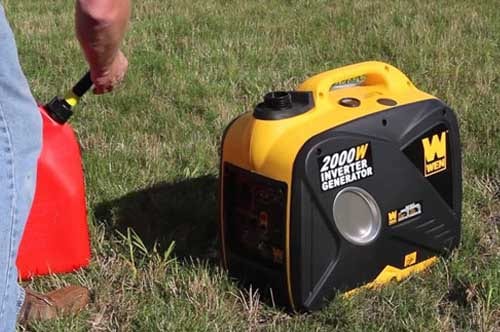
Wen 56200i (2000 Watt Inverter Generator): Definitive Review 2026