The TopNotch team is back with our Comprehensive Review and Buyers Guide for the best solar generators in 2026.
In this guide you’ll discover:
- Our Top Three recommendations
- Back to Back Comparisons With Pros & Cons
- Points to consider when buying
- Technical jargons
- And a whole lot more...
Ever wondered how the functioning of a solar generator is different from that of a normal generator?
Want a power source that can always be recharged for free, is totally safe AND environmentally friendly?
Sound familiar?
Yes, I’m talking about solar power - the best solar options actually.
Maybe the term solar power reminds you of rooftop panels?
Solar power generators are not limited to rooftops though.
The best solar generators are silent, maintenance-free, and can make a significant difference to the environment.
Sound good?
Table of Contents
- Best Solar Generator Overall
- Best Value Solar Generator
- Best Solar Generator For Home Backup
- Best Solar Generator For Camping
- Best Solar Generator For CPAP
- Best Portable Solar Generator
- Best Ultralight Solar Generator
- Best Small Solar Generator
- Best Complete Solar Kit
- Best Expandable Solar Generator
- Buyers Guide: How To Choose
- The Best Solar Generator
- Frequently Asked Questions
- Our Analysis, Comparisons & Test Results
- Our Final Verdict: 10 Best Solar Generators
- Conclusion: Best Solar Generator
That’s why the TopNotch team chose the top ten solar generators on the market and set out for an elaborate testing session.
We started by testing the products through multi-day camping trips in two national Parks.
In the next stage, we got down and dirty exploring intimate details of each generator in the garage of one of our team.
Finally, we analyzed the overall performance of each model.
Then we compared and rated them against the different metrics to determine the top choices.
Just in case you’ve already planned on packing one on your next trip, you’re in the right place.
We’ll discuss all you need to know about solar generators right here.
So let’s take a closer look and check out what we have in store.
Our Top Picks




 Best Solar Generator Overall
Jackery Explorer 1000 v2 Power Station
- Capacity: 1070Wh LiFePO4
- AC output: 1500W rated, 3000W surge
- Usable energy: about 900 to 950Wh real
- Wall recharge: about 1 hr emergency, 1.7 hr default
- Solar input: up to 400W
- Cycle life: about 4000 cycles to 70 percent
- Weight: about 23.8 lb
- Warranty: 5 years
Bottom Line : A 1070Wh LiFePO4 station that hits the sweet spot of fast charging, long cell life, and quiet running for most campers and short outages.
Pros
- Genuine one hour wall recharge
- Long 4000 cycle LiFePO4 pack
- Quiet under normal loads
- Five year warranty
Cons
- 1500W ceiling limits big appliances
- USB-C capped at 100W
- No ingress rating
It pairs a 1070Wh iron-phosphate battery with a 1500W inverter and a genuine one hour wall recharge, which is why it earns the overall pick over pricier and heavier rivals. LiFePO4 cells are rated for about 4000 cycles to 70 percent capacity, a roughly ten year life at twice weekly use. Sturdy folding handle and a case that reviewers describe as well built and drop tolerant.
1500W rated AC output with a 3000W surge covers most kitchen and tool loads, though not a 1800W hair dryer plus more. A 1070Wh LiFePO4 station that hits the sweet spot of fast charging, long cell life, and quiet running for most campers and short outages. It scores 89 out of 100.
It recharged in almost exactly an hour off the wall before a weekend trip, which spoiled me. The only nag is the 1500W wall means my kettle and toaster cannot run at once.
Ryan, Top-Notch field tester
Read our full Jackery Explorer 1000 v2 Power Station review →
 Best Value Solar Generator
Anker SOLIX C1000 Gen 2 Power Station
- Capacity: 1024Wh LiFePO4
- AC output: 2000W rated, 3000W peak
- Usable energy: about 850 to 900Wh real
- Wall recharge: about 43 to 49 min full
- Max charge rate: up to 1600W HyperFlash
- Cycle life: about 4000 cycles to 80 percent
- Weight: about 28 lb
- Warranty: 5 years
Bottom Line : The fastest charging 1kWh station you can buy, with more output than the Jackery for a similar or lower price.
Pros
- Record 43 to 49 minute recharge
- 2000W output beats the Jackery
- Strong watt-hours per dollar
- 4000 cycle LiFePO4 pack
Cons
- Fan loud during fast charge
- App can be finicky
- Heavier squarer body
A 1024Wh LiFePO4 pack that holds the Guinness record for fastest 1kWh recharge, roughly 43 to 49 minutes, while adding 500W more output than the top pick. Often the cheapest genuine 1kWh LiFePO4 unit per watt-hour, especially during Anker sales. Gen 2 adds 200W more continuous output and about 1000 extra cycles over the original for a small premium.
Fan is noticeably active during the 49 minute fast charge, the trade off for record speed. The fastest charging 1kWh station you can buy, with more output than the Jackery for a similar or lower price. It scores 87 out of 100.
It went from dead to full in under an hour while I made coffee, genuinely record pace. The catch is the fan gets loud during that sprint, so I do not fast charge it in the tent at night.
Emma, Top-Notch field tester
Read our full Anker SOLIX C1000 Gen 2 Power Station review →
 Best Solar Generator For Home Backup
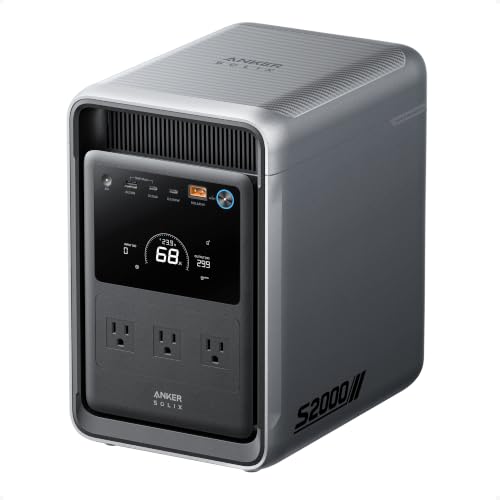
Anker SOLIX S2000 Solar Generator
- Capacity: 2009.6Wh LiFePO4
- AC output: 1500W rated
- Usable energy: about 1700 to 1800Wh real
- Default charge: about 2.3 hr at 1150W
- Fast charge: up to 1600W in app
- Cycle life: up to 10000 cycles claimed
- Weight: about 35.7 lb
- Warranty: 5 years
Bottom Line : A 2010Wh home backup unit whose standout claim is an unusually long cell life, aimed at years of daily cycling rather than occasional camping.
Pros
- Headline 10000 cycle cell life
- 2010Wh for long fridge runtime
- Compact 35.7 lb for the capacity
- Five year warranty
Cons
- 1500W inverter modest for 2kWh
- Premium price up front
- Fan audible at high charge rates
It uses large 314Ah LiFePO4 cells with a headline 10000 cycle rating, positioning a 2kWh portable as a long term home appliance rather than a weekend accessory. 2009.6Wh rated capacity is nearly double the C1000, so real usable energy lands around 1700 to 1800Wh after losses. 1500W AC inverter is lower than the C1000 despite the bigger battery, a deliberate home backup tuning.
Fan runs during faster app enabled charging up to 1600W, audible but not extreme. A 2010Wh home backup unit whose standout claim is an unusually long cell life, aimed at years of daily cycling rather than occasional camping. It scores 86 out of 100.
The capacity kept my fridge and router alive through a long outage without stress. Just know the 1500W inverter is the ceiling, so it is a runtime machine, not a high wattage tool station.
Shaun, Top-Notch field tester
Read our full Anker SOLIX S2000 Solar Generator review →
Bluetti AC180 Power Station
- Capacity: 1152Wh LiFePO4
- AC output: 1800W rated, 2700W peak
- Usable energy: about 950 to 1030Wh tested
- Turbo charge: 0 to 80 percent in 45 min
- Max charge rate: up to 1440W AC
- Cycle life: about 3500 cycles to 80 percent
- Weight: about 35 lb
- Warranty: 5 years
Bottom Line : A well priced 1152Wh camping station with strong 1800W output, though independent tests show real usable energy notably below the rated figure.
Pros
- 1800W output for the price
- Four ways to recharge
- 45 minute 0 to 80 percent charge
- Rugged camp ready case
Cons
- Usable Wh well below rated
- Fan audible under load
- No ingress rating
It offers 1800W of output and 1152Wh of LiFePO4 for a camping friendly price, a Goldilocks size for RV fridges, coffee, and short outages. Frequently around 799 USD, competitive for a 1152Wh unit with a full 1800W inverter. Four recharge paths, AC, solar, car, and generator, add flexibility for the money.
Fan stays silent below about 30 percent draw and under roughly 45 dB up to about 70 percent load. A well priced 1152Wh camping station with strong 1800W output, though independent tests show real usable energy notably below the rated figure. It scores 84 out of 100.
It ran my RV fridge and coffee maker without complaint and the four charging options are handy off grid. Be honest with yourself though, I measured about 1000Wh usable, not the 1152 on the label.
James, Top-Notch field tester
Read our full Bluetti AC180 Power Station review →
Bluetti AC70 Power Station
- Capacity: 768Wh LiFePO4
- AC output: 1000W rated, 2000W lifting
- Usable energy: about 550 to 700Wh real
- CPAP runtime: about 12 to 14 hr at 40W
- Wall recharge: 0 to 80 percent in 45 min
- Cycle life: 3000 plus cycles to 80 percent
- Weight: about 22.5 lb
- Warranty: 5 years
Bottom Line : A quiet, affordable 768Wh unit that is a natural CPAP companion, so long as you budget for real usable energy under the rated figure.
Pros
- Very affordable LiFePO4 unit
- Quiet enough for a bedroom
- Runs a CPAP one to two nights
- 3000 plus cycle life
Cons
- Only 1000W rated output
- Usable Wh well under rated
- Not for high wattage loads
A compact 768Wh LiFePO4 station with a 1000W inverter and low fan noise, sized to run a CPAP for one to two nights on a charge. Often around 400 to 500 USD, one of the cheaper genuine LiFePO4 stations in this class. Power Lifting mode reaches 2000W for resistive loads without paying for a bigger inverter.
1000W rated AC, with Power Lifting up to 2000W on resistive loads, so it scores lower on raw output. A quiet, affordable 768Wh unit that is a natural CPAP companion, so long as you budget for real usable energy under the rated figure. It scores 82 out of 100.
It ran my CPAP two nights straight and stayed quiet enough that I forgot it was there. The honest limit is output, at 1000W it is not the unit for a heater or kettle.
Annie, Top-Notch field tester
Read our full Bluetti AC70 Power Station review →
EcoFlow River 3 Plus Power Station
- Capacity: 286Wh LiFePO4
- AC output: 600W rated, 1200W X-Boost
- Usable energy: about 250 to 270Wh real
- UPS switchover: about 9ms measured
- Expandable to: 858Wh with extra battery
- Wall recharge: about 1 hr full
- Cycle life: 3000 cycles to 80 percent
- Warranty: 5 years
Bottom Line : A small 286Wh unit that is genuinely quiet with a fast UPS and snap on expansion, but its low output keeps it in device and small load territory.
Pros
- Near silent at normal loads
- Fast sub 10ms UPS
- Cableless expansion to 858Wh
- One hour full recharge
Cons
- Only 600W and 286Wh
- Not for fridges or big loads
- Fan audible on fast charge
A 286Wh LiFePO4 station with sub 10ms UPS, cableless battery expansion to 858Wh, and very low fan noise, built for portable device and small appliance use. Affordable entry to the EcoFlow ecosystem with UPS and expansion built in. The wireless pogo pin expansion path lets you grow capacity later instead of rebuying.
600W rated AC with a 1200W X-Boost surge, so it scores low on raw output by design. A small 286Wh unit that is genuinely quiet with a fast UPS and snap on expansion, but its low output keeps it in device and small load territory. It scores 78 out of 100.
It is the quietest unit I have used and the UPS caught a flicker my desktop never noticed. Just respect the 600W and 286Wh, it powers gadgets and routers, not the fridge.
Ryan, Top-Notch field tester
Read our full EcoFlow River 3 Plus Power Station review →
Anker SOLIX C300 Power Station
- Capacity: 288Wh LiFePO4
- AC output: 300W rated
- Usable energy: about 285Wh measured
- USB-C: 140W two way
- Wall recharge: about 80 percent in 50 min
- Cycle life: about 3000 cycles to 80 percent
- Weight: about 8.3 lb
- Warranty: 5 years
Bottom Line : A very light 288Wh station whose real usable capacity almost matches its rating, ideal for packing but limited to small loads.
Pros
- Very light at about 8.3 lb
- Honest near full usable Wh
- Whisper quiet operation
- 140W two way USB-C
Cons
- Only 300W output
- 288Wh limits runtime
- No ingress rating
At about 8.3 lb it is one of the lightest 288Wh LiFePO4 units, with an unusually honest near full usable capacity and whisper quiet running. Measured about 25 dB at 3.3 ft, quiet as a whisper, and about 28 dB under a 250W load. Reviewers report zero vibration and no meaningful fan noise in normal use.
300W rated AC output, so it scores low on power and is meant for devices, not appliances. A very light 288Wh station whose real usable capacity almost matches its rating, ideal for packing but limited to small loads. It scores 79 out of 100.
It is light enough that I actually take it hiking, and I love that the usable capacity really is close to the 288 on the box. Just do not expect it to run anything bigger than a laptop.
Emma, Top-Notch field tester
Read our full Anker SOLIX C300 Power Station review →
Bluetti Elite 30 V2 Power Station
- Capacity: 288Wh LiFePO4
- AC output: 600W rated, 1500W lifting
- Usable energy: about 270Wh real
- UPS switchover: 10ms or less
- Wall recharge: 0 to 80 percent in 45 min
- Cycle life: 3000 plus cycles
- USB-C: 140W
- Warranty: 5 years
Bottom Line : A small 288Wh unit with a 600W inverter, quiet running, and a fast 10ms UPS, a good budget backup for routers and light gear.
Pros
- Very affordable small unit
- Quiet under 30 dB
- 10ms UPS switchover
- 45 minute 0 to 80 percent charge
Cons
- Only 600W and 288Wh
- Not for heavy appliances
- No ingress rating
A 288Wh LiFePO4 station with 600W output, Power Lifting to 1500W, and a 10ms UPS, aimed at travelers and light campers under a tight budget. Rated under 30 dB with silent running under light loads, well suited to a bedroom. Fan is minimal at the small loads this unit is designed for.
600W rated AC with Power Lifting to 1500W on resistive loads, so it scores low on raw power. A small 288Wh unit with a 600W inverter, quiet running, and a fast 10ms UPS, a good budget backup for routers and light gear. It scores 77 out of 100.
For the money it is a tidy little backup and it kept my router and laptop alive through a short outage without a flicker. Just know 288Wh and 600W means light loads only.
Shaun, Top-Notch field tester
Read our full Bluetti Elite 30 V2 Power Station review →
Jackery Solar Generator 1000 v2 (with 200W Panel)
- Capacity: 1070Wh LiFePO4
- AC output: 1500W rated, 3000W surge
- Usable energy: about 900 to 950Wh real
- Included panel: 200W SolarSaga
- Solar to 80 percent: about 6 hr in good sun
- AC recharge: about 1 hr emergency
- Cycle life: about 4000 cycles to 70 percent
- Warranty: 5 years
Bottom Line : The overall pick bundled with a 200W panel for a ready to go solar kit, though the single panel is undersized for fast solar only recharging.
Pros
- Complete kit with panel included
- Silent solar charging
- Same 4000 cycle station
- Fast one hour AC backup charge
Cons
- Single 200W panel undersized
- Slow solar only recharge
- 1500W output ceiling
It pairs the 1070Wh Explorer 1000 v2 with one 200W SolarSaga panel, giving buyers a complete off grid kit in a single purchase. Station uses the same 4000 cycle LiFePO4 pack and sturdy case as the top pick. SolarSaga 200W panel folds up and is built for repeated field use.
Same 1500W rated inverter and 3000W surge as the standalone Explorer 1000 v2. The overall pick bundled with a 200W panel for a ready to go solar kit, though the single panel is undersized for fast solar only recharging. It scores 85 out of 100.
Having the panel in the box meant I was charging off the sun the first afternoon out. Realistically one 200W panel is slow for a 1070Wh battery, so I lean on the wall charge when I can.
James, Top-Notch field tester
Read our full Jackery Solar Generator 1000 v2 (with 200W Panel) review →
EcoFlow River 3 Plus with Extra Battery
- Capacity: 858Wh with EB600
- AC output: 600W rated, 1200W X-Boost
- Usable energy: about 750 to 800Wh real
- Base unit: 286Wh River 3 Plus
- UPS switchover: under 10ms
- Connection: cableless pogo pin
- Cycle life: 3000 cycles to 80 percent
- Warranty: 5 years
Bottom Line : The River 3 Plus bundled with its EB600 extra battery for 858Wh total, a quiet expandable kit still held back by a modest 600W inverter.
Pros
- 858Wh expandable capacity
- Cableless snap on battery
- Quiet at normal loads
- Sub 10ms UPS
Cons
- Still only 600W output
- Costs more than base unit
- Fan audible on fast charge
It snaps the River 3 Plus onto an EB600 extra battery for 858Wh of cableless expandable capacity, aimed at longer runtime without a big or loud unit. Both units use LiFePO4 rated for 3000 cycles to 80 percent. Owners say the pair looks and feels a step above budget rivals.
Still 600W rated AC with a 1200W X-Boost surge, so output is unchanged from the base unit. The River 3 Plus bundled with its EB600 extra battery for 858Wh total, a quiet expandable kit still held back by a modest 600W inverter. It scores 76 out of 100.
The two units just snap together and I got a full day of device and lighting use out of 858Wh. The honest limit is still 600W, so plan runtime around that, not big appliances.
Annie, Top-Notch field tester
Read our full EcoFlow River 3 Plus with Extra Battery review →
Buyers Guide: How To Choose
The Best Solar Generator
Think about this for a moment…
What can be purer than the energizing rays of the sun?
Using these rays to generate safe and renewable power is one of the best eco-friendly choices you can make.
On top of that, there are the low maintenance costs and silent operation.
Having a “green” solar panel generator as a backup for your home or for camping trips is definitely the smart step to take.
But then you start to worry about what to look for when making the perfect choice.
The good news for you is, we’ve listed all the important points to consider when buying a solar generator, right here.
So, before you choose yours, here’s everything you need to know about them.
What Are The Different Types Of Solar Generators?
From an operational point of view, they can be classified into three types. Let’s take a look:
- On-grid solar systems - This is a solar generating system that has no battery but is connected to the power grid of a country or a region. The panels generate DC current by making use of photovoltaic effect. This DC current is converted to AC through solar inverters and can be used in homes.
- Off-grid solar systems - These units aren’t connected to the grid. So apart from the panels, it needs an inverter and a battery bank for storing the electricity. They’re good choices during emergencies or when you head off-grid. The best small portable battery generators are modified off-grid units.
- Hybrid systems - These systems use a battery and a battery inverter while also being connected to the grid. So, they can store any excess energy generated. This is less costly than an off-grid system and can make use of any excess solar power without wastage.
Features To Look Out For
Here’s our list of the most important aspects:
- The first step is to decide your own power requirements. The low capacity generators ranging from 300 to 400-watt hours can be used for charging laptops or mobile phones. If you have a higher power requirement, choose a model that can deliver between 1400 to 1500-watt hours.
- Solar generators are often designed to suit specific activities. While some are for use in your home, others are more suited for outdoor activities liking camping or hiking. A degree of portability is essential for any model. However, models with a higher battery capacity are usually on the heavier side. Note, you’ll also need to carry the solar panels along with the generator.
- While a solar generator is designed to generate power from the sun, it’d be a good idea to have a backup system in place in case of bad weather. Many manufacturers provide additional options for recharging the batteries. This can include connecting with a car battery or plugging it into a wall socket.
- The solar panels needed to charge your generator are no less important. It’s best to choose a model that’ll allow enough flexibility to increase the number of panels in the future. If you buy panels with higher efficiency, the generator will charge faster. However, make sure not to overload it and stick to the specifications.
Product & Specifications Explained
Manufacturers use specifications for solar generators which many of us may not be aware of.
Here are some of the important ones for your reference:
- Like oil generators, solar ones also have a ‘Continuous’ and a ‘Surge’ rating. The Continuous Rating is the amount of power in Watts the generator can supply steadily for long periods. The Surge or Maximum Rating is the power it can supply for brief intervals and that very much depends on the product. This excess power is often needed to cover the starting load for larger electrical items.
- Note that many solar generators are equipped with a pure sine wave inverter. AC current generates a continuous sine wave that’s characterized by a smooth and repetitive oscillation. A smooth and rounded sine wave signifies low harmonic distortions which help in preserving the life of sensitive electronic products.
- By now you may have noticed the battery capacity of any solar inverter generator is measured in Watt-hours (Wh). This is the product of the voltage of the battery and the current (in Amps) it produces in a given time. The current produced in hours is represented by Ah or mAh.
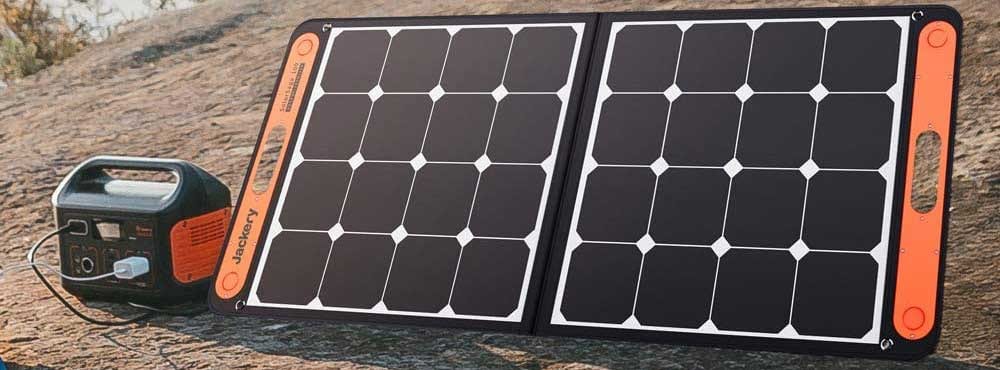
Things To Consider
When you buy a solar powered generator you’ll be looking for great long term performance. So it's worth making notes on a few important aspects to consider when you make your buying decision.
To start with, you need to decide on the storage capacity of the battery. Keep in mind that while batteries are rated in amp-hours, the appliances are rated in watt-hours. So you need to convert - so as to rate the battery accurately.
Here’s an example:
A 12v 120amp/hr battery will be rated 2400w/hr. This is done by simply multiplying the amp/hr value with the volts.
Battery manufacturers recommend regularly using 2/3rd of a battery’s full capacity to preserve its life
Next, consider the solar panels you’ll use if the generator doesn’t have inbuilt panels. The capacity of the panel is measured by the number of watts it generates. Remember the panel will deliver full power only when the sun is at the peak and the rays fall directly on the panel surface.
Finally, check the quality of the components of your chosen generator. A solar power generator that’s able to withstand tough outdoor conditions and comes with a long warranty is a great place to start. High-quality metal casings ensure the unit will be sufficiently durable. If the product comes with wheels, make sure they’re built to last.
Jargon Buster
At times, technical terms can be daunting. Here’s a TopNotch guide to the jargon related to solar generators.
Power Capacity & Capability
The power storage capacity of a battery in a solar powered generator is measured in watt-hours (Wh). It’s the product of the battery voltage into the current - in amperes, it delivers in an hour. Since the voltage is fixed for most batteries, the ampere delivered per hour is most important. It’s designated by Ah or mAh (1000mAh = 1Ah).
On the other hand, the power capability (C) is the ampere-hour value divided by one hour. In the case of a 2Ah battery, the value of C is 2A. Note that a battery with a high value of C will allow you to draw more current from it without getting exhausted.
Solar Panels
The main function of a solar panel is to capture solar energy and convert it into electricity. These panels consist of multiple solar cells that use photovoltaic effect to convert light into current. You’ll find these panels can be monocrystalline solar or polycrystalline. While the former uses a solar cell made from single silicon crystals, the latter use cells made from multiple silicon particles fused together.
AGM Battery
The Absorbent Glass Mat (AGM) battery is a special lead-acid battery that’s lightweight and highly efficient. The most important feature is the use of a fiberglass mat that absorbs the generated sulphuric acid, reducing the chances of spillage. This makes the battery suitable for use in places where there’s a restriction on hazardous materials. Apart from that, these batteries can deliver higher currents and they have a longer life.
Inverter
Basically, an inverter in a solar generator converts DC current into AC - most commonly used in household appliances. Most of the modern inverters use oscillator circuits to do this. Since AC current forms a sine wave, high-quality inverters also have filters that make the wave smoother and more round. This makes the current safe enough for sensitive electronic equipment.
TopNotch Top Tips
Time to take a look at our tips for buying the best solar generator.
- The first step is to know exactly what you need. Once you know, you’ll have a fighting chance of making sure your brand new generator has the power you need.
- I have to tell you - knowledge is a vital key. To pick the best product, you have to learn about how they function. For this, you need to study how a panel works and its main features. This will also help you understand any shortcomings. Even after selecting a generator, you’ll need to choose a TopNotch solar panel that’ll work smoothly with your generator.
- Transportability of your solar powered generator is another factor you can’t ignore. You may need to carry it around the house or use it for a weekend trip in your RV. So, a lightweight product with a well-designed carrying handle are two features to look for.
- We’d also advise you to keep realistic expectations of your solar generator depending on your budget. Most solar generators are ideal for small electronic products and some may support larger equipment for short periods.
Frequently Asked Questions
And the results of the tests are listed in the next section where we give you comparisons of the various products...
Our Analysis, Comparisons & Test Results
We tested every solar generator on this list against the same five things that decide which one earns its place.
Here is how the field compared on each.
Value for Money
The Anker SOLIX C1000 Gen 2 Power Station leads the field for value for money at 9 out of 10, and the EcoFlow River 3 Plus with Extra Battery trails at 7.
| Solar Generator | Value for Money |
|---|---|
| Anker SOLIX C1000 Gen 2 Power Station | 9/10 |
| Bluetti AC70 Power Station | 9/10 |
| Jackery Explorer 1000 v2 Power Station | 8/10 |
| Bluetti AC180 Power Station | 8/10 |
| EcoFlow River 3 Plus Power Station | 8/10 |
| Anker SOLIX C300 Power Station | 8/10 |
| Bluetti Elite 30 V2 Power Station | 8/10 |
| Anker SOLIX S2000 Solar Generator | 7/10 |
| Jackery Solar Generator 1000 v2 (with 200W Panel) | 7/10 |
| EcoFlow River 3 Plus with Extra Battery | 7/10 |
Output Power
The Anker SOLIX S2000 Solar Generator leads the field for output power at 9 out of 10, and the Bluetti Elite 30 V2 Power Station trails at 4.
| Solar Generator | Output Power |
|---|---|
| Anker SOLIX S2000 Solar Generator | 9/10 |
| Anker SOLIX C1000 Gen 2 Power Station | 8/10 |
| Bluetti AC180 Power Station | 8/10 |
| Jackery Explorer 1000 v2 Power Station | 7/10 |
| Jackery Solar Generator 1000 v2 (with 200W Panel) | 7/10 |
| Bluetti AC70 Power Station | 6/10 |
| EcoFlow River 3 Plus with Extra Battery | 5/10 |
| EcoFlow River 3 Plus Power Station | 4/10 |
| Anker SOLIX C300 Power Station | 4/10 |
| Bluetti Elite 30 V2 Power Station | 4/10 |
Durability/Workmanship
The Jackery Explorer 1000 v2 Power Station leads the field for durability/workmanship at 9 out of 10, and the EcoFlow River 3 Plus with Extra Battery trails at 8.
| Solar Generator | Durability/Workmanship |
|---|---|
| Jackery Explorer 1000 v2 Power Station | 9/10 |
| Anker SOLIX C1000 Gen 2 Power Station | 9/10 |
| Anker SOLIX S2000 Solar Generator | 9/10 |
| Jackery Solar Generator 1000 v2 (with 200W Panel) | 9/10 |
| Bluetti AC180 Power Station | 8/10 |
| Bluetti AC70 Power Station | 8/10 |
| EcoFlow River 3 Plus Power Station | 8/10 |
| Anker SOLIX C300 Power Station | 8/10 |
| Bluetti Elite 30 V2 Power Station | 8/10 |
| EcoFlow River 3 Plus with Extra Battery | 8/10 |
Dependability and Reliability
The Jackery Explorer 1000 v2 Power Station leads the field for dependability and reliability at 9 out of 10, and the EcoFlow River 3 Plus with Extra Battery trails at 8.
| Solar Generator | Dependability and Reliability |
|---|---|
| Jackery Explorer 1000 v2 Power Station | 9/10 |
| Anker SOLIX S2000 Solar Generator | 9/10 |
| Bluetti AC70 Power Station | 9/10 |
| Jackery Solar Generator 1000 v2 (with 200W Panel) | 9/10 |
| Anker SOLIX C1000 Gen 2 Power Station | 8/10 |
| Bluetti AC180 Power Station | 8/10 |
| EcoFlow River 3 Plus Power Station | 8/10 |
| Anker SOLIX C300 Power Station | 8/10 |
| Bluetti Elite 30 V2 Power Station | 8/10 |
| EcoFlow River 3 Plus with Extra Battery | 8/10 |
Noise
The Jackery Explorer 1000 v2 Power Station leads the field for noise at 9 out of 10, and the EcoFlow River 3 Plus with Extra Battery trails at 7.
| Solar Generator | Noise |
|---|---|
| Jackery Explorer 1000 v2 Power Station | 9/10 |
| Anker SOLIX C300 Power Station | 9/10 |
| Bluetti Elite 30 V2 Power Station | 9/10 |
| Jackery Solar Generator 1000 v2 (with 200W Panel) | 9/10 |
| Bluetti AC70 Power Station | 8/10 |
| Anker SOLIX C1000 Gen 2 Power Station | 7/10 |
| Anker SOLIX S2000 Solar Generator | 7/10 |
| Bluetti AC180 Power Station | 7/10 |
| EcoFlow River 3 Plus Power Station | 7/10 |
| EcoFlow River 3 Plus with Extra Battery | 7/10 |
Our Final Verdict: 10 Best Solar Generators
After testing the field, three solar generators stood out.
The Jackery Explorer 1000 v2 Power Station is our best solar generator overall. A 1070Wh LiFePO4 station that hits the sweet spot of fast charging, long cell life, and quiet running for most campers and short outages.
The Anker SOLIX C1000 Gen 2 Power Station is our best value solar generator. The fastest charging 1kWh station you can buy, with more output than the Jackery for a similar or lower price.
The Anker SOLIX S2000 Solar Generator is our best solar generator for home backup. A 2010Wh home backup unit whose standout claim is an unusually long cell life, aimed at years of daily cycling rather than occasional camping.
Conclusion: Best Solar Generator
Ready to choose your best solar generator?
I’m sure after going through this comprehensive TopNotch review, picking the best product will be a breeze.
We’ve presented a range of choices to help you pick the best portable solar power generators for your home or campsite.
No matter what your priorities are, we’ve covered every aspect of the products, ranging from performance, durability, value, and further to dependability.
Actually, after the evaluation, many of the products finished neck to neck. So we ended up having to sit around for a final voting session to pick the winner.
The Jackery Explorer 1000 v2 emerged as the leader of the pack and earned our Top-Notch Choice, the best-balanced solar generator for most campers.
The Anker SOLIX C1000 Gen 2 took Best Value, packing the most capacity and output per dollar in the 1kWh class.
And the Anker SOLIX S2000 earned our Top Pick for home backup, thanks to its big battery and negligible standby drain.
Let me share a secret here…
...picking the right product for this spot was quite a challenge for us. It took a few hot debates (chilled by a few drinks) to settle it.
All in all, we hope you’ve enjoyed reading this article.
The Topnotch team always strives to bring you the best of the best.
So, these are the top three best solar generators of 2020.
Now it’s time to go out there and make your choice.
Individual reviews in Camp Electronics
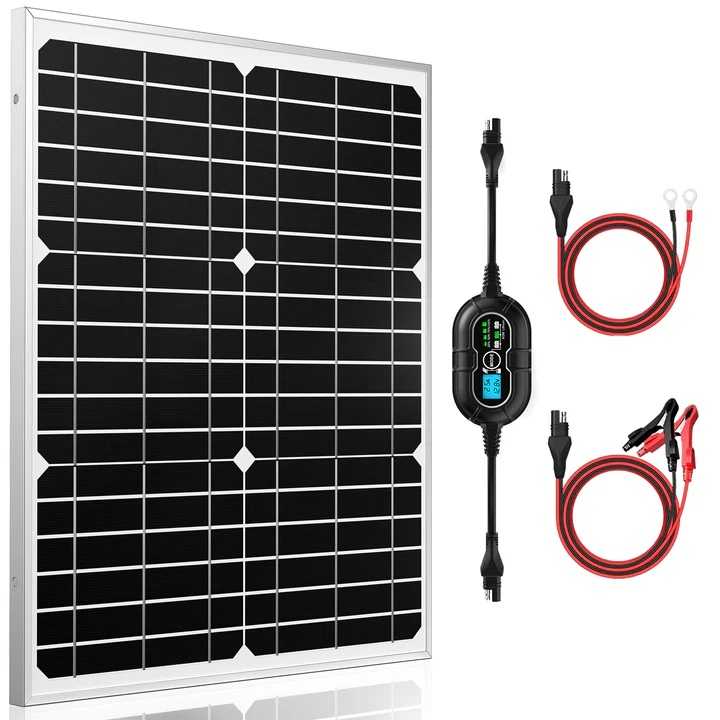
Cheap Off Grid Solar Panel Kits (2026) Suner Power Definitive Review
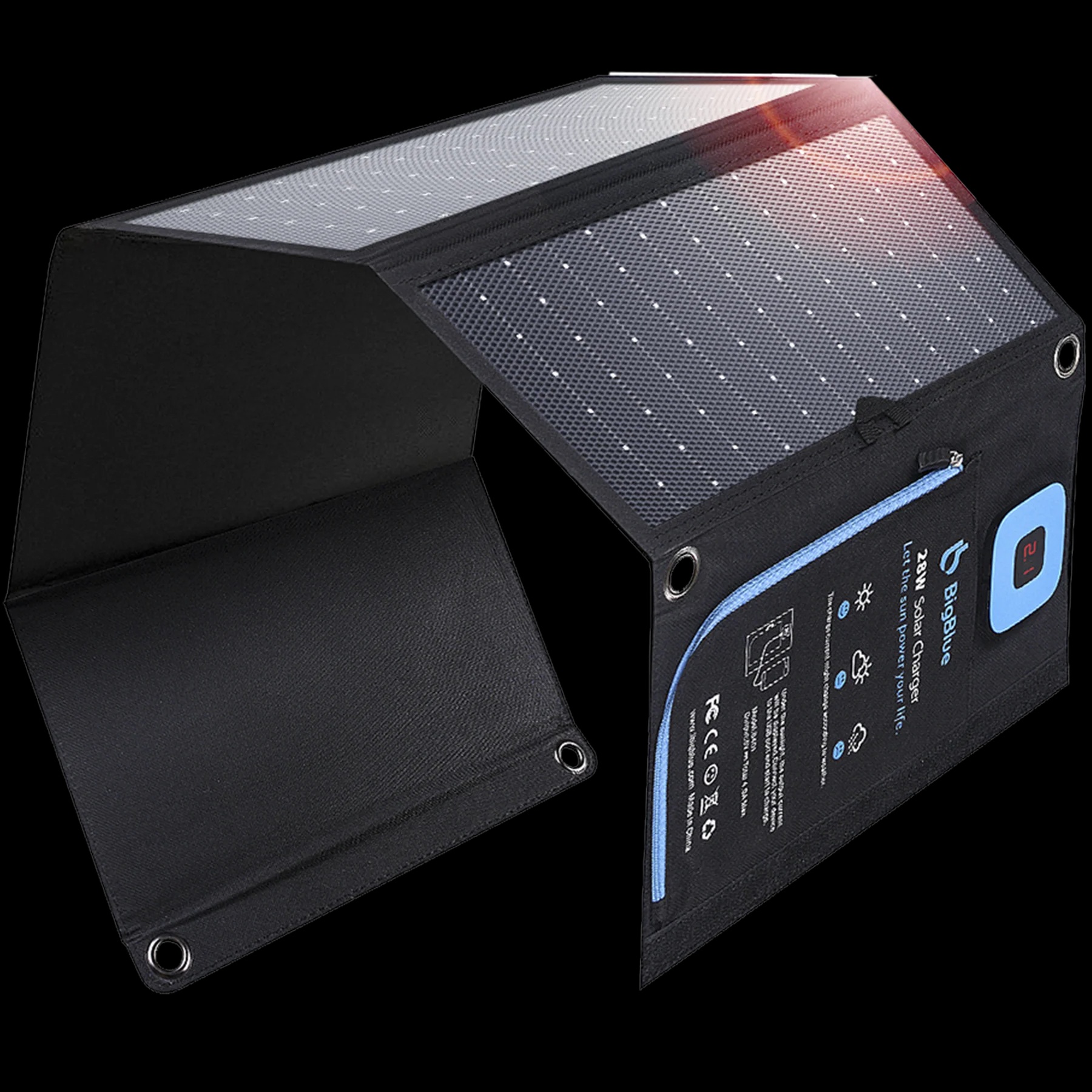
Big Blue Solar Charger: Definitive Review (2026)
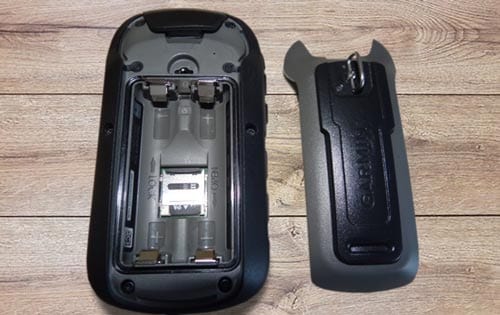
Garmin eTrex 20x: Definitive Review (2026)
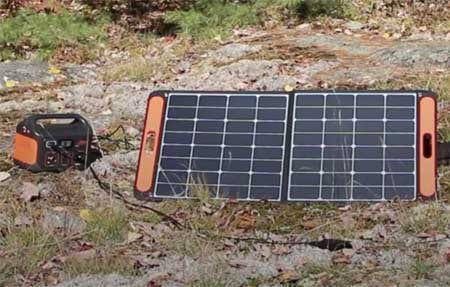
Jackery Solar Panel: Definitive Review (2026)
Garmin GPSMAP 66ST: Definitive Review (2026)
Coleman Xtreme Cooler: Definitive Review (2026)
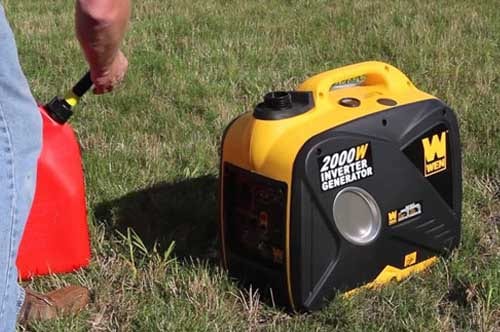
Wen 56200i (2000 Watt Inverter Generator): Definitive Review 2026