For this 2026 update we went back and re-tested the whole field from scratch. We pulled in 28 of the best camping coolers, packed them for a 3-day lake trip and a 5-day backcountry run, and had 5 of us track ice through the hot part of each day. On top of the field time we read back through 236 owner reviews to see what really holds up after a season of hard use, then narrowed it all down to our Favorite Top 10.
Whether you’re heading out for a weekend of remote fishing, or it’s a family reunion at a camping ground you’re off to, there’s a perfect cooler out there to suit you.
Carry on reading to find out:
- Which coolers are safe for use in bear country, and why;
- That how a cooler is made affects their insulating properties;
- The perfect ice: food ratio;
- And much more…
Table of Contents
- Best Cooler For Camping Overall
- Best Value Cooler For Camping
- Best Lightweight Cooler For Long Trips
- Best Wheeled Cooler For Remote Camping
- Best Ultra-Light Wheeled Cooler
- Best Budget Cooler For Camping
- Best Cooler For Short Trips
- Best Rugged Rotomolded Cooler
- Best Powered Cooler For Car Camping
- Best Budget High-Performance Cooler
- Buyers Guide:
- How To Choose The Best Coolers For Camping
- Frequently Asked Questions
- Our Analysis, Comparisons & Test Results
- Our Final Verdict: 10 Best Coolers For Camping
- Conclusion: 10 Best Camping Coolers
Our Top Picks




 Best Cooler For Camping Overall
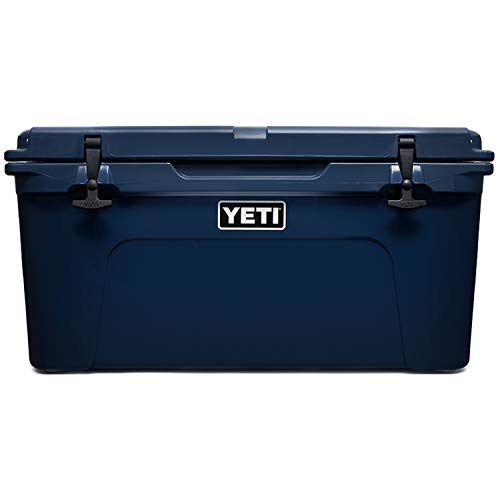
YETI Tundra 65 Hard Cooler
- Capacity: 65 qt, about 42 cans
- Empty weight: about 30 lb
- Ice capacity: about 52 lb
- Insulation: up to 3 in PermaFrost
- Latches: T-Rex rubber, 2
- Construction: rotomolded, one piece
- Real ice life: about 4 to 6 camping days
- Warranty: 5 years
Bottom Line : The bench mark rotomolded camp cooler with real multi day cold, but you pay a premium and it is heavy to carry.
Pros
- Top tier cold hold
- Bomb proof rotomolded build
- Strong T-Rex latch seal
- Bear resistant when locked
Cons
- High price for the size
- Heavy at about 30 lb empty
- No wheels for camp moves
A one piece rotomolded box with up to 3 inches of PermaFrost insulation and T-Rex latches that earns the top spot on cold hold and build, not on price or carry comfort. Rotomolded single piece shell has no seams or weak points, which is the main reason it takes years of tailgate abuse. Certified bear resistant when padlocked through the two front lock holes.
Empty weight is about 30 lb, so loaded with ice and drinks it is a genuine two person lift. The bench mark rotomolded camp cooler with real multi day cold, but you pay a premium and it is heavy to carry. It scores 93 out of 100.
Ice was still floating on day five at a hot desert camp and the latches never once popped loose. The catch is the weight, loaded it took two of us to lift it into the truck bed.
Ryan, Top-Notch field tester
Read our full YETI Tundra 65 Hard Cooler review →
 Best Value Cooler For Camping
RTIC 65 QT Ultra-Tough Cooler
- Capacity: 65 qt, about 64 cans
- Empty weight: about 36.5 lb
- Ice capacity: about 75 lb
- Insulation: about 2.4 in closed cell foam
- Latches: rubber T style, 2
- Construction: rotomolded, one piece
- Real ice life: about 4 to 5 camping days
- Drain: threaded plug
Bottom Line : Roughly 90 percent of a YETI Tundra for a lot less money, but it is heavier and its latches feel a step down.
Pros
- Big price saving vs YETI
- Larger interior volume
- Nearly matching cold hold
- Tough rotomolded shell
Cons
- Heavier at about 36 lb empty
- Stiffer, less refined latches
- Not bear certified
A rotomolded 65 that undercuts the YETI by about 100 dollars while holding ice nearly as long, which is why it wins on value. Typically about 100 dollars cheaper than the YETI Tundra 65 for very close performance, a Wirecutter pick on price. Gives more usable interior volume than the YETI, holding about 64 cans or 75 lb of ice.
Empty weight is about 36.5 lb, noticeably heavier than the YETI and a firm two person carry loaded. Roughly 90 percent of a YETI Tundra for a lot less money, but it is heavier and its latches feel a step down. It scores 90 out of 100.
For the money it kept pace with far pricier coolers and I got four solid days of ice on a lake weekend. It is a heavy beast though, and the latches take a firm shove to close.
Emma, Top-Notch field tester
Read our full RTIC 65 QT Ultra-Tough Cooler review →
 Best Lightweight Cooler For Long Trips
ENGEL 60 QT Ultra-Light Cooler
- Capacity: 60 qt
- Empty weight: about 20 to 21.5 lb
- Insulation: about 2 in closed cell foam
- Latches: compression, silicone gasket
- Construction: injection molded
- Extras: wire basket, divider, opener
- Real ice life: about 5 to 6.5 days
- Claimed ice life: up to 7 days
Bottom Line : Injection molded so it is far lighter than rotomolded rivals while still holding ice most of a week, a smart pick for longer carries.
Pros
- Very light at about 20 lb
- Six to seven day ice life
- Basket and divider included
- Easy compression latches
Cons
- Not true rotomolded toughness
- No wheels
- Thinner walls than rivals
An injection molded 60 quart that comes in around 20 lb, roughly 20 percent lighter than comparable rotomolded coolers, yet still delivers about six to seven day ice life. Airtight compression latches and a silicone gasket seal the lid firmly and are easy to work one handed. Wire basket keeps delicate food above meltwater, and the divider helps organise drinks and food.
Injection molded shell is durable but not a true rotomolded box, so it is a step behind YETI and Pelican on brute toughness. Injection molded so it is far lighter than rotomolded rivals while still holding ice most of a week, a smart pick for longer carries. It scores 88 out of 100.
I could actually carry this one on my own across a campsite, which I cannot say for my old rotomolded cooler, and ice lasted into day six. The lighter shell does feel less bombproof, so I keep it out of the truck bed scrum.
Shaun, Top-Notch field tester
Read our full ENGEL 60 QT Ultra-Light Cooler review →
YETI Roadie 48 Wheeled Cooler
- Capacity: 48 qt
- Empty weight: about 28 lb
- Wheels: NeverFlat solid tires
- Handle: retractable periscope
- Construction: injection molded
- Latches: single rubber
- Real ice life: about 5 to 7 days
- Drain: drain plug
Bottom Line : Rolls easily over rough ground and holds ice for a week or more, but the tall shape and high price are the trade offs.
Pros
- Rolls over rough terrain
- Very long cold hold
- Puncture resistant wheels
- Retractable periscope handle
Cons
- High price
- Tall shape packs flat items poorly
- Still about 28 lb empty
A wheeled YETI with puncture resistant NeverFlat wheels and a periscope handle that make a heavy cooler easy to tow to remote sites. Retractable periscope handle telescopes up for towing and drops flat for storage. Single rubber latch and gasket seal the lid, and there is a drain plug for emptying.
One of the pricier options here, you pay a clear premium for the wheels and periscope handle. Rolls easily over rough ground and holds ice for a week or more, but the tall shape and high price are the trade offs. It scores 85 out of 100.
Towing it half a mile of gravel to the campsite was the easiest cooler haul I have done, and ice held past day five. The upright shape wastes space if you pack a lot of flat trays, and the price stung.
James, Top-Notch field tester
Read our full YETI Roadie 48 Wheeled Cooler review →
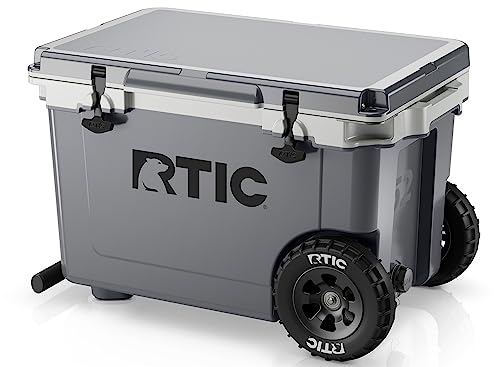
RTIC 52 QT Ultra-Light Wheeled Cooler
- Capacity: 52 qt
- Empty weight: about 30 lb
- Ice capacity: up to about 53 lb
- Insulation: up to 2.5 in closed cell foam
- Wheels: stainless axle, bearings
- Seal: o ring
- Real ice life: about 3 to 5 days
- Claimed ice life: up to 7 days
Bottom Line : A wheeled cooler that costs far less than the YETI Roadie and is about 30 percent lighter than rotomolded, though its cold hold is a touch shorter.
Pros
- Much cheaper than YETI Roadie
- Light at about 30 lb
- Smooth rolling stainless axle
- O ring sealed lid
Cons
- Shorter cold hold than YETI
- Not full rotomolded
- Claimed 7 day ice is optimistic
An ultra light wheeled 52 quart with a stainless axle and smooth bearings that pulls easily and undercuts the wheeled YETI on price. Much cheaper than the YETI Roadie 48 while offering wheels and long cold hold, a strong value pick. You get a real rolling cooler without paying the premium wheeled cooler price.
Uses up to 2.5 in of closed cell foam with an o ring seal. A wheeled cooler that costs far less than the YETI Roadie and is about 30 percent lighter than rotomolded, though its cold hold is a touch shorter. It scores 84 out of 100.
It pulled across the campground with barely any effort and cost a fraction of the wheeled YETI. Ice was mostly gone by day four in the heat, so it is more of a weekender than a week long cooler.
Annie, Top-Notch field tester
Read our full RTIC 52 QT Ultra-Light Wheeled Cooler review →
Coleman Classic Insulated Cooler
- Capacity: 52 qt
- Latches: none, lift off lid
- Drain: drain tap
- Construction: standard molded plastic
- Claimed ice life: up to 5 days
- Real ice life: about 1 to 2 solid days
- Best use: short trips
- Sizes: 52, 70, 120, 150 qt
Bottom Line : Cheap, light and easy to drain, but the honest ice life is one to two days and there is no latch on the lid.
Pros
- Lowest price here
- Very easy to drain
- Light and easy to carry
- Fine for short trips
Cons
- Ice life only 1 to 2 days
- No lid latch or clips
- Weakest build in the group
A low cost, lightweight hard cooler that suits short trips, where its budget price matters more than its modest cold hold. By far the cheapest cooler here, a fraction of the rotomolded prices. Sensible pick for occasional or short trip campers who do not need multi day ice.
Coleman claims up to 5 days ice, but Tom's Guide found it near room temperature after four days. Cheap, light and easy to drain, but the honest ice life is one to two days and there is no latch on the lid. It scores 78 out of 100.
For an overnight it does the job and empties in seconds off the drain tap. By day three of a warm trip the ice was long gone and the lid has no latch, so it is strictly a short trip cooler for me.
Ryan, Top-Notch field tester
Read our full Coleman Classic Insulated Cooler review →
YETI Roadie 24 2.0 Hard Cooler
- Capacity: 24 qt
- Empty weight: about 13 lb
- Carry: DoubleDuty shoulder strap
- Insulation: PermaFrost
- Construction: rotomolded
- Drain: drain plug
- Real ice life: about 2 to 3 days
- Latches: single rubber
Bottom Line : A small, tough, easy to carry YETI for day trips and short stays, but you pay a premium for a cooler that holds ice two to three days.
Pros
- Very portable at about 13 lb
- Hands free shoulder strap
- Tough rotomolded build
- Added drain plug
Cons
- Pricey for the small size
- Only 2 to 3 day real ice
- Small 24 qt capacity
A compact 24 quart YETI with a DoubleDuty shoulder strap and drain plug, built for grab and go trips rather than long camp stints. The DoubleDuty shoulder strap lets you carry it hands free, padded and adjustable. The 2.0 update added a drain plug so you no longer have to tip it to empty.
Expensive for its small size, you pay YETI money for a day trip cooler. A small, tough, easy to carry YETI for day trips and short stays, but you pay a premium for a cooler that holds ice two to three days. It scores 83 out of 100.
Slinging it over one shoulder to the beach was effortless and it kept drinks cold all weekend. It is tiny and it is dear, so I would not lean on it for a full camping week.
Emma, Top-Notch field tester
Read our full YETI Roadie 24 2.0 Hard Cooler review →
Pelican 70 Quart Elite Cooler
- Capacity: 70 qt, about 46 cans
- Empty weight: about 34 lb
- Latches: press button molded
- Construction: rotomolded
- Real ice life: about 5 to 7 days
- Claimed ice life: up to 9 days at 2 to 1
- Warranty: lifetime guarantee
- Drain: quick, complete
Bottom Line : One of the toughest and coldest coolers here with a lifetime guarantee, but it is heavy and the drain plug leash is a weak spot.
Pros
- Top tier toughness
- Lifetime guarantee
- Excellent cold hold
- Easy press button latches
Cons
- Heavy at about 34 lb
- No wheels
- Short, strain prone drain leash
A rotomolded 70 quart with press button latches and a lifetime guarantee that matches the best cold hold in testing, aimed at hard field use. Rotomolded build scored far above traditional coolers in OutdoorGearLab durability testing. Backed by a lifetime guarantee, the strongest warranty in this group.
Empty weight is about 34 lb, one of the heaviest here and a firm two person lift when loaded. One of the toughest and coldest coolers here with a lifetime guarantee, but it is heavy and the drain plug leash is a weak spot. It scores 84 out of 100.
The press button latches are the easiest to work one handed of any cooler I own and ice held near a full week. It is a back saver to move loaded, and that little drain leash already looks like it will snap.
Shaun, Top-Notch field tester
Read our full Pelican 70 Quart Elite Cooler review →
Dometic CFX2 45 Portable Fridge/Freezer
- Capacity: 45 L, about 60 cans
- Weight: about 45 lb
- Temp range: minus 7 to 68 F
- Power: 12 or 24V DC, 100 to 240V AC
- Compressor: VMSO3
- Control: LED panel, Bluetooth app
- Extras: USB port, interior LED
- Cords: AC and DC included
Bottom Line : A real compressor fridge freezer that never needs ice, ideal for car camping with power, though it is expensive and needs a battery or shore power.
Pros
- Never needs ice
- Freezes to minus 7 degrees
- Battery protection built in
- App and LED control
Cons
- Very expensive
- Needs a power source
- Heavy at about 45 lb
A powered 45 liter fridge freezer that chills to minus 7 degrees and runs off AC or DC, removing the ice question entirely for car campers. It does not rely on insulation for cold, an active compressor holds any set temperature indefinitely with power. Adjustable range runs from minus 7 to 68 degrees, so it can freeze as well as chill.
The most expensive unit here by a wide margin, priced as a fridge not a cooler. A real compressor fridge freezer that never needs ice, ideal for car camping with power, though it is expensive and needs a battery or shore power. It scores 82 out of 100.
Cold drinks all week with zero ice runs was a revelation on an overland trip. It is heavy, it is pricey, and you live and die by your battery, so it only makes sense if you camp off the truck.
James, Top-Notch field tester
Read our full Dometic CFX2 45 Portable Fridge/Freezer review →
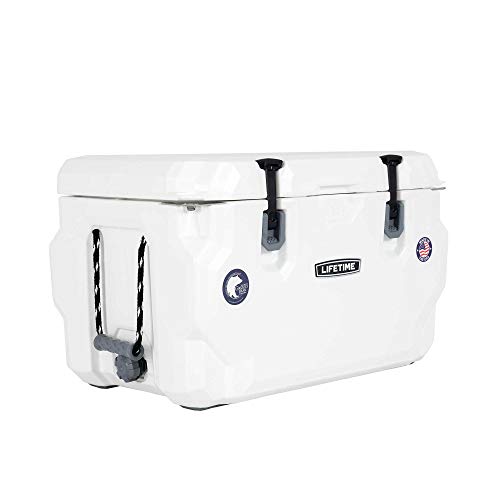
Lifetime 65 QT High Performance Cooler
- Capacity: 65 qt, about 75 cans
- Empty weight: about 25.5 lb
- Latches: 2 rubber
- Build: heavy duty polyethylene
- Bear rating: IGBC certified
- Drain: hose compatible spout
- Real ice life: about 5 to 7 days
- Warranty: 5 year limited
Bottom Line : A bear resistant rotomolded style cooler with genuine week long ice hold at a budget price, the best cold per dollar in this group.
Pros
- Long ice hold on a budget
- IGBC bear resistant
- Light for the class at 25.5 lb
- Easy latches and hose drain
Cons
- No wheels
- Warranty shorter than Pelican
- Finish less polished than YETI
An IGBC bear resistant 65 quart that holds ice up to eight days yet costs a fraction of the premium brands, which is why it earns its budget high performance award. Costs far less than YETI or Pelican while delivering comparable multi day ice, the best value here on cold hold. Comes with two bottle openers, lock holes and serviceable feet at the budget price.
Empty weight is about 25.5 lb, lighter than most coolers that hold ice this long. A bear resistant rotomolded style cooler with genuine week long ice hold at a budget price, the best cold per dollar in this group. It scores 86 out of 100.
It held ice nearly as long as coolers costing twice as much and the latches are a joy to use. It has no wheels and the finish is a bit rougher than a YETI, but for the money the cold hold is hard to beat.
Annie, Top-Notch field tester
Read our full Lifetime 65 QT High Performance Cooler review →
Buyers Guide:
How To Choose The Best Coolers For Camping

What are the different kinds of coolers?
These days, camping coolers for camping come in such a wide range of designs and price points that it can feel a bit like wading through a minefield when it comes to choosing the best one to fit your individual needs.
That’s where we come in.
To start, here’s a quick rundown of the different kinds you can choose from.
Powered Coolers
As the name suggests, these can be plugged into the power outlet in your car. While this makes them heavier, it can be a huge boon when it’s really hot. Most of them won’t even need any ice to keep your food and drink perfectly chilled.
So what’s bad about them?
Well, they’re going to use electricity so if you’re camping away from your car or want to conserve power they’re probably not the best choice.
They’re also more expensive than most others, due to the extra parts required.

Hard Coolers
This version of cooler makes up the majority of products in our review. Hard coolers, as the name suggests, are made from a rigid plastic casing.
Anything else?
As well as their intended purpose of keeping your food and drink cold, hard coolers make excellent seats, step stools, and side tables.
We can also confirm their suitability for keeping squabbling children separated in the car on long journeys.
Simply place the cooler on the middle seat and you have an instant barrier!
And yes, we’ve tested this out on more than one occasion.
Soft Coolers
Making up the budget en, we have the soft cooler bags. While these come in a wide variety of shapes and sizes, they’re all compressible and have carry straps and handles.
They’re not as well insulated as hard ones but are an excellent choice for shorter trips.
What’s bad about them?
Their cooling ability isn’t great, so they certainly won’t keep your food cold for more than a day.

A Note About Food Safety
When thinking about which kind of cooler will suit your needs best, the first thing to think about is the version of food you want to keep cool and for how long.
If you plan to keep any food including meat, eggs, milk or cheese in your cooler than you’ll need to pay close attention to the insulating capabilities of any cooler you’re thinking of buying.
The recommended temperature for keeping fresh foods of this type, as recommended by the USDA, is anywhere below 40 degrees Fahrenheit.
You’ll find that soft coolers simply won’t be up to the task of maintaining this temperature for any decent length of time.
That means you’ll need to consider hard and powered coolers.
If you’re mainly looking to store processed foods and drinks then you have a wider margin for error.
That being said, most would agree that keeping our end-of-day beer icy cold is pretty important too!
These are the features to look out for
When choosing the best cooler for your needs, there are a few different things to consider.
Like what?
Well, when we rate coolers, there are a few important metrics to bear in mind. Some, like their ice retention capabilities, are important across the board.
Others, like portability, will matter more to some of us than others. So here’s a quick run-down of the things that we considered when testing, comparing and rating them.
Ease Of Use
The best camping coolers are a joy to use. They’re so well designed and full of intuitive features that you might not notice just how good they are until you try to use a different design.
Here are some things to consider when it comes to choosing the ones which are easy to use.
One of the first things we look for on a cooler is the drainage.
Granted, some cheaper coolers, including soft coolers, won’t have a drain at all.
With these, it’s a case of upending them in order to clean them out.
Most hard coolers usually have one or two drainage holes. These can vary in size, with the idea being that you can use a small drain to allow water to flow out while keeping the ice inside. When it comes to cleaning the entire cooler, simply open the larger drain and your job’s so much quicker.
It’s always worth checking the placement of a drain. You’re looking for one as close to the base of the cooler as possible.
But why?
Well, just imagine trying to clean out a cooler that has a drain 2 inches up the side. You’ll be swilling the dirty water around forever trying to get it to drain.
Not good.
Some drain plugs come complete with a small leash.
This is a genius idea.
No more sending your teenager off to clean the cooler only for them to return minus the plug. If the plug is safely attached to the cooler even when it’s unplugged, then it can’t go missing.
Although we should note that most cooler manufacturers do sell replacement plugs.
The latches come in a range of designs.
Some of these are easy to use, and others are downright annoying.
Plastic latches that need to be snapped or clipped into position are popular and for good reason. They’re easy to use and can often be opened using just one hand.
You might also see latches that are rubberized.
These need to be pulled then stretched to release them from their clip.
This style of the latch is very robust and the least likely to accidentally pop open. The downside is that they need more brute force and usually take two hands to operate.
Soft coolers are often fastened close with a zip. This makes them easy to use but as the zips aren’t insulated this makes them less efficient at staying cold than a hard cooler.
Finally, some budget options don’t have latches at all. With these, the lid simply slots onto the base. Again, this reduces its insulation capabilities. It’s also easy for these lids to come loose which means that after a few hours, your cooler may not be as cool as you thought.
Build Quality
This varies considerably but as a general rule, the higher the price point of your cooler, the better the construction quality.
Soft coolers are made from fabric, with a layer of insulating material sandwiched in the middle. They’ll often be lined with silver plastic on the inside to help with the retention of cold air inside the cooler.
Budget hard coolers can be found in very basic styro foam insulation or polystyrene. Some versions also use cardboard.
Many hard coolers within the next price bracket will be made from a rigid plastic outer and inner. In between these two layers will be a layer of insulating foam. This is an excellent design that has stood the test of time. It does allow for breakages or cracks to develop in the seals between layers, though.
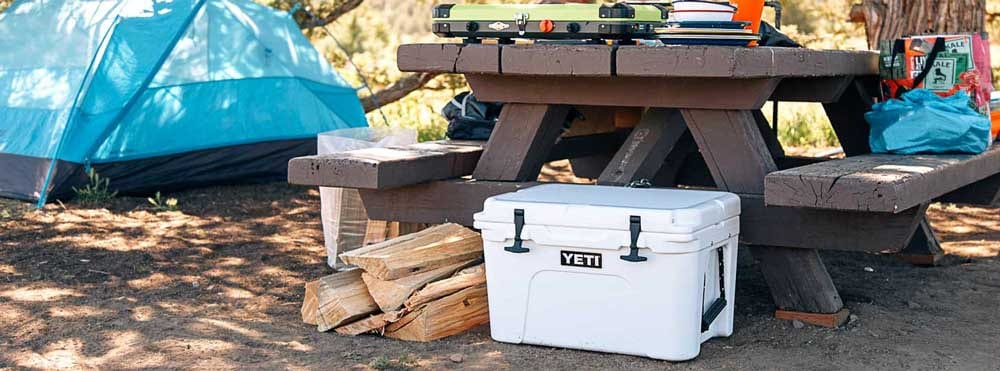
At the top end, you may see cooler construction being advertised as ‘rotomolded’. This stands for ‘rotationally molded’ as basically means the cooler has been created from a continuous piece of hard plastic that has been molded around insulating foam.
But why is that better?
Rotomolded versions are generally accepted to be the best in terms of construction quality because the molding process means that there aren’t any weak spots.
The casing is created as a single piece, meaning there are no areas where different materials are sealed together. There’s much less chance of cold air escaping, or warm air entering.
Durability
Many coolers come with a pretty hefty price tag, so you want to be sure they’re durable enough to stand up to a good few years of use.
Luckily, we’ve done a lot of hard work for you.
When testing we subjected them to lots of hard use, designed to verify whether the seals, handles, latches, and drains can stand up to intense wear and tear.
A lot do come with a limited warranty, so it’s definitely worth checking this out when you’re comparing models.
Ice Retention
This is really the most important metric to pay attention to. A cooler can look as beautiful as you like, and have all the bells and whistles you could wish for, but if it can’t retain ice (and therefore cold) it’s pretty much useless.
Many cooler manufacturers will state how many days their cooler can retain ice for. Of course, out in the field, this will depend on a whole raft of different factors including how often you open the cooler, whether or not items have been pre-chilled, outside temperature, and what your ratio of ice to food and drink is.
Portability
If you’re planning on camping somewhere that you need to move equipment across any sort of distance, then consider how portable your chosen cooler will be.
As a general rule, coolers are large and fairly cumbersome. Even when they have a handle at each end they can still take quite some carrying.
We’ve bumped our knees, dropped our end of the cooler, and tripped over a rock while trying to navigate a cooler to our cookout area...
That’s not going to be the best start your road trip!
Thankfully, you can now choose to buy a cooler with wheels - such a wonderful invention! Instead of swearing as you drop your cooler and the lid pops open spilling your food, you can now wheel it (almost) effortlessly over a wide variety of terrain.
You can choose from a wide range of wheel styles as well.
From small wheels intended for short trips, to inflatable ones for seriously rugged terrain.
When it comes to portability, another thing you should bear in mind is the type of handles a cooler comes with.
Especially if it doesn’t have wheels.
Some handles are uncomfortably small, especially when compared to the size of the cooler.
You might struggle to hold them easily or find your fingers slipping as you try to hold the weight of a fully-loaded cooler.
Indented handles can be easier to hold, as well as leaving the outside form of the cooler essentially unchanged. While this might not seem like an important point - it certainly makes them easier to pack into the trunk of your car.
Others may have handles that stick out from the side of the cooler.
While these are undeniably easy to hold, they do get in the way when it comes to packing.
Jargon Buster
As we mentioned earlier, you might see coolers advertised as ‘rotomolded’. This refers to the manufacturing process which typically results in those with the best insulating capabilities.
There’s another piece of jargon we’ve seen in plenty of cooler advertisements… IGBC certified.
The IGBC is the Interagency Grizzly Bear Committee, which is tasked with stipulating regulations around how best to store your food when camping in areas with bear populations.
The IGBC has a minimum standard they test coolers against.
Those that pass, get certified.
Bear in mind, that this certification in no way guarantees that a cooler will be completely and utterly bear-proof. It only means that the cooler has been approved as one that reduces easy access to the contents of the cooler.
It also means the amount of odor coming from the cooler is lower, which in turn should reduce the amount of wildlife attracted to it.
Sometimes that includes the use of locks, which have to be purchased separately.
With that said, if you intend to camp in bear country then you’ll definitely want to choose a cooler which has earned this certification.
Frequently Asked Questions
Q What should I put in my cooler?
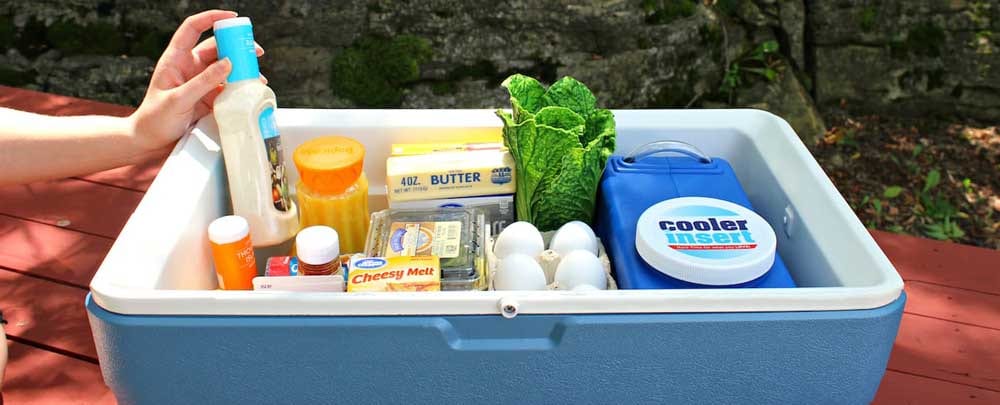
Of course, you should follow the same food hygiene rules you would at home - so be sure to separate raw fish or meat from your other food. Many include separate baskets that sit at the top of the cooler for this purpose.
You’ll also want to store food and drinks! Whether that's a refreshing sports drink to help you rehydrate after a long day’s hike, or a beer to celebrate that record-breaking fish catch.
Q. What’s the best way to pack it?
Of course, you could do this but we wouldn’t recommend it!
The first step is to plan ahead. Plan what you’re going to pack and make sure these items are frozen or refrigerated already. This will help keep the temperature as low as possible.
Next up, store food in resealable Tupperware, or Ziploc bags. You’ll want to leave packing until just before you head off on your trip.
When packing, place a shallow layer of ice in the base of your cooler before placing items you’ll use last at the bottom. Put those you’ll use first at the top. If you have ice leftover, add it in around your food and drink.
Q. What’s the best way to keep food cold in my cooler?
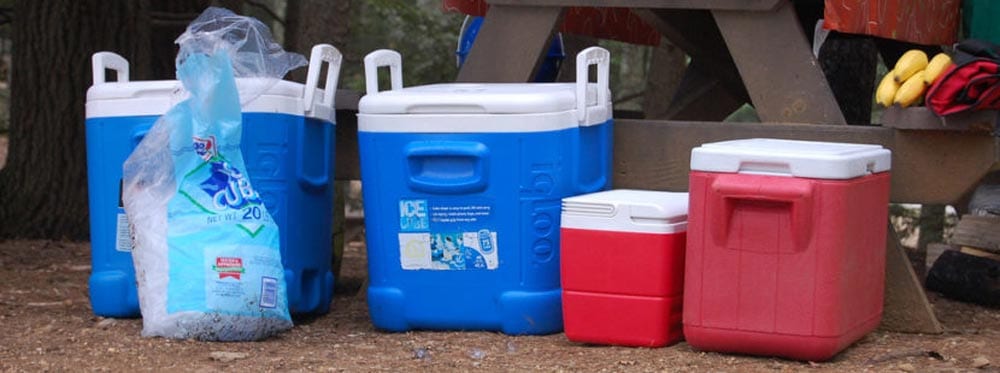
- Place a reflective blanket over your cooler
- Keep it in the shade when possible
- Choose a light-colored option for maximum heat-reflection
Round-Up
We’re almost there! Now you’re armed with everything you need to know to select the perfect camping cooler for your needs.
What’s next?
We spent the last few months researching, selecting, and finally (exhaustive) testing the best coolers for camping that we could find on the market today.
We put each one through our rigorous testing process, and you can compare all their ratings below.
So what else do you need to know?
The links to our Top 3 products can be found at the start and end of this review. These are the coolers that really performed outstandingly… and as a result, we’d recommend them to anyone.
All that’s left to say is that when you’re chilling out with a cold drink after a happy day’s camping, don’t forget to send us a virtual cheer!
Our Analysis, Comparisons & Test Results
We tested every cooler on this list against the same five things that decide which one earns its place.
Here is how the field compared on each.
Value for Money
The RTIC 65 QT Ultra-Tough Cooler leads the field for value for money at 10 out of 10, and the Dometic CFX2 45 Portable Fridge/Freezer trails at 5.
| Cooler | Value for Money |
|---|---|
| RTIC 65 QT Ultra-Tough Cooler | 10/10 |
| Coleman Classic Insulated Cooler | 10/10 |
| Lifetime 65 QT High Performance Cooler | 10/10 |
| RTIC 52 QT Ultra-Light Wheeled Cooler | 9/10 |
| ENGEL 60 QT Ultra-Light Cooler | 8/10 |
| YETI Tundra 65 Hard Cooler | 7/10 |
| Pelican 70 Quart Elite Cooler | 7/10 |
| YETI Roadie 48 Wheeled Cooler | 6/10 |
| YETI Roadie 24 2.0 Hard Cooler | 6/10 |
| Dometic CFX2 45 Portable Fridge/Freezer | 5/10 |
Ease of Use
The YETI Roadie 24 2.0 Hard Cooler leads the field for ease of use at 10 out of 10, and the Lifetime 65 QT High Performance Cooler trails at 8.
| Cooler | Ease of Use |
|---|---|
| YETI Roadie 24 2.0 Hard Cooler | 10/10 |
| YETI Tundra 65 Hard Cooler | 9/10 |
| ENGEL 60 QT Ultra-Light Cooler | 9/10 |
| YETI Roadie 48 Wheeled Cooler | 9/10 |
| RTIC 52 QT Ultra-Light Wheeled Cooler | 9/10 |
| RTIC 65 QT Ultra-Tough Cooler | 8/10 |
| Coleman Classic Insulated Cooler | 8/10 |
| Pelican 70 Quart Elite Cooler | 8/10 |
| Dometic CFX2 45 Portable Fridge/Freezer | 8/10 |
| Lifetime 65 QT High Performance Cooler | 8/10 |
Durability/Workmanship
The YETI Tundra 65 Hard Cooler leads the field for durability/workmanship at 10 out of 10, and the Coleman Classic Insulated Cooler trails at 6.
| Cooler | Durability/Workmanship |
|---|---|
| YETI Tundra 65 Hard Cooler | 10/10 |
| Pelican 70 Quart Elite Cooler | 10/10 |
| RTIC 65 QT Ultra-Tough Cooler | 9/10 |
| YETI Roadie 48 Wheeled Cooler | 9/10 |
| YETI Roadie 24 2.0 Hard Cooler | 9/10 |
| ENGEL 60 QT Ultra-Light Cooler | 8/10 |
| RTIC 52 QT Ultra-Light Wheeled Cooler | 8/10 |
| Dometic CFX2 45 Portable Fridge/Freezer | 8/10 |
| Lifetime 65 QT High Performance Cooler | 8/10 |
| Coleman Classic Insulated Cooler | 6/10 |
Portability
The YETI Roadie 24 2.0 Hard Cooler leads the field for portability at 10 out of 10, and the Pelican 70 Quart Elite Cooler trails at 5.
| Cooler | Portability |
|---|---|
| YETI Roadie 24 2.0 Hard Cooler | 10/10 |
| ENGEL 60 QT Ultra-Light Cooler | 9/10 |
| YETI Roadie 48 Wheeled Cooler | 9/10 |
| RTIC 52 QT Ultra-Light Wheeled Cooler | 9/10 |
| Coleman Classic Insulated Cooler | 8/10 |
| YETI Tundra 65 Hard Cooler | 6/10 |
| RTIC 65 QT Ultra-Tough Cooler | 6/10 |
| Dometic CFX2 45 Portable Fridge/Freezer | 6/10 |
| Lifetime 65 QT High Performance Cooler | 6/10 |
| Pelican 70 Quart Elite Cooler | 5/10 |
Insulation
The YETI Tundra 65 Hard Cooler leads the field for insulation at 10 out of 10, and the Coleman Classic Insulated Cooler trails at 6.
| Cooler | Insulation |
|---|---|
| YETI Tundra 65 Hard Cooler | 10/10 |
| Dometic CFX2 45 Portable Fridge/Freezer | 10/10 |
| RTIC 65 QT Ultra-Tough Cooler | 9/10 |
| ENGEL 60 QT Ultra-Light Cooler | 9/10 |
| YETI Roadie 48 Wheeled Cooler | 9/10 |
| Pelican 70 Quart Elite Cooler | 9/10 |
| Lifetime 65 QT High Performance Cooler | 9/10 |
| RTIC 52 QT Ultra-Light Wheeled Cooler | 8/10 |
| YETI Roadie 24 2.0 Hard Cooler | 8/10 |
| Coleman Classic Insulated Cooler | 6/10 |
Our Final Verdict: 10 Best Coolers For Camping
After testing the field, three coolers stood out.
The YETI Tundra 65 Hard Cooler is our best cooler for camping overall. The bench mark rotomolded camp cooler with real multi day cold, but you pay a premium and it is heavy to carry.
The RTIC 65 QT Ultra-Tough Cooler is our best value cooler for camping. Roughly 90 percent of a YETI Tundra for a lot less money, but it is heavier and its latches feel a step down.
The ENGEL 60 QT Ultra-Light Cooler is our best lightweight cooler for long trips. Injection molded so it is far lighter than rotomolded rivals while still holding ice most of a week, a smart pick for longer carries.
Conclusion: 10 Best Camping Coolers
That’s a wrap!
We all know that great feeling of settling down for dinner after a long day in the wilderness.
Choosing the best cooler for your needs when camping, means you know your food is going to stay fresh while you’re off enjoying yourself.
Now you’re armed with all the information you need about the different features you can find on coolers today you can use our review to help you decide which one is best for you.
Is portability the highest priority on your list of must-haves?
Or is selecting a cooler with the very best insulation your number one feature?
Remember your new cooler should see you through many seasons of camping.
That first cold drink from your brand new cooler is going to taste amazing…
Enjoy!
Individual reviews in Camp Kitchen
Blackstone Grill: Definitive Review (2026)
Generac GP2200i Generator: Definitive Review (2026)
Char-Broil Grill (Grill2Go X200): Definitive Review 2026)
GSI Outdoors Glacier Basecamper: Definitive Review (2026)
YETI Hopper Flip Portable Soft Cooler: Definitive Review (2026)
Engel Cooler/Dry Box 19 Qt: Definitive Review (2026)
IceMule Classic Cooler: Definitive Review (2026)
